How to Helsinki: Kalevala

The Defense of Sampo (Turku Art Museum; 1896; tempera on canvas; Akseli Gallen-Kallela)
The Defense of Sampo via Wikimedia (Turku Art Museum; 1896; tempera on canvas; Akseli Gallen-Kallela)

Worldcon is in Helsinki this year. As a Finnish-American couple, we are very excited about this! In the coming months, we’d like to offer some practical advice about visiting Finland to our fellow fans who are considering going to the event but haven’t had experience with Finland and Finns before.

Erik here. You may have heard of Kalevala before. It has inspired English-speaking authors from Henry Wadsworth Longfellow to J. R. R. Tolkien. If Kalevala is new to you, it’s well worth knowing something about before heading to Helsinki for Worldcon. Kalevala has an important place in Finnish culture and fandom alike.

Origins of Kalevala

In the mid-1800s, with the rise of national romantic movements across Europe, there was a passion for rediscovering and recording oral literature and folk traditions before they were wiped away by modernity. The Grimm brothers in Germany may be the most famous collectors, but similar efforts were happening in many pats of Europe, including Finland. Elias Lönnrot, a rural doctor in eastern Finland, began collecting old songs and stories from the people in the villages he served. Numerous characters and themes were woven through these tales: wizards and warriors, love and longing, mayhem and magic. Many of the characters seemed to be versions of pre-Christian gods and spirits who had survived the the coming of Christianity by being turned into heroes or fitted into Christian stories. Lönnrot also learned the techniques that master singers used to weave one tale into another, building up a larger story out of a common store of incidents and refrains. After many years in the field, he put these techniques to use himself, stripping away Christian elements and assembling a wide variety of the stories he had collected into one grand epic. He called this tale Suuri Kalevala, or “The Great Land of Kaleva.”

Brothers Poavila and Triihvo Jamanen reciting traditional Finnish folk poetry in the village of Uhtua, 1894, photograph by I. K. Inha via Wikimedia

At the time, Finland was part of the Russian Empire (having been under Swedish rule since the twelfth century and conquered by Russia in 1809), but an independence movement was stirring and many people were beginning to pay attention to the elements of a unique Finnish identity. Kalevala became one of the focal points of this movement. By reaching back to pre-Christian history, almost a thousand years before, it promised a validation of Finnish identity grounded in primordial origins free of Russian or Swedish interference. Finland gained its independence in 1917 (happy centennary!) and Kalevala has remained a vital part of Finnish culture ever since.

Kalevala has an earthy immediacy. The poetic language of Kalevala is colloquial and its heroes, despite being magical warriors, live rustic lives as farmers and fishers not much different from the village folk Lönnrot collected the tales from. There are occasional mentions of wars and great battles and one daring Viking-like raid, but more often the tales revolve around such tasks as chopping down trees, mending horse-drawn sledges, and pulling in fishing nets. The power of nature is ever-present, from the summer sun and the winter frost to the trees of the forests and the water of Finland’s ten-thousand lakes.
Continue reading

How to Helsinki: Resources by Worldcon 75 Staff

Worldcon is in Helsinki this year. As a Finnish-American couple, we are very excited about this! In the coming months, we’d like to offer some practical advice about visiting Finland to our fellow fans who are considering going to the event but haven’t had experience with Finland and Finns before.

Eppu here. Erik already started with his take on Finns through American eyes. I want to briefly highlight some resources Worldcon 75 has already published through their progress reports and elsewhere:

Confession: I had to check what kind of food vorschmack is, and I’m pretty sure I’ve never eaten it! 🙂

Post edited for style, and again to add resources.

In Live and Active Cultures we talk about cultures and cultural differences.

How to Helsinki: Concerning Finns

170119lippuWorldcon is in Helsinki this year. As a Finnish-American couple, we are very excited about this! In the coming months, we’d like to offer some practical advice about visiting Finland to our fellow fans who are considering going to the event but haven’t had experience with Finland and Finns before. Maybe we’ll see you there!

Today, we’d like to introduce you to your hosts: the Finns.

Erik here. As an American who’s been married to a Finn for over a decade, I’ve had a lot of time to learn, observe, and make mistakes, so let me offer you the benefit of my personal experience being a foreigner in Finland. Finnish culture can be hard to get a handle on for Americans like me. While some things will feel familiar, especially if you come from small-town New England like me, some of your basic social instincts can also lead to awkward situations. Like any group of people, of course, Finns are all different. There’s nothing I can say that will be true of every Finn you meet, but there are some things worth knowing so that you can be a good guest.

After many years of living between Finland and the US, here’s the best way I can describe Finnish culture: Finland is a small rural village of 5 million people.

Finland used to be a relatively poor, rural country dependent on timber, farming, and fishing. In the past couple of generations, it has become a wealthy, urban, high-tech country, but many Finns have held onto the values and social conventions of their rural ancestors. This is the root of many features of Finnish culture: the village mentality that we are all in this together and we all depend on one another. The rules of Finnish life are grounded in the expectation that you will take into account how your actions affect other people, their time, their personal space, and their responsibilities.

With that in mind, here are some specific dos and don’ts of being a good visitor in Finland:

DO be on time – being late is disrespectful of other people’s time and obligations. Even if it’s just for a casual social event, showing up late in Finland is as rude as not showing up at all in the US.

DO make room for others – when walking on the sidewalk, waiting in line, riding the bus, or anywhere else. Make sure your bag or purse isn’t in anyone’s way, either.

DO line up – and keep the line orderly if you’re waiting for something. Finns in general have a larger bubble of personal space than Americans, so be careful to make sure you’ve found the end of the line.

DO give people space – Finns expect a lot of it and they will give you a lot of it in return. If you’re talking to a Finn and they back away, don’t chase them. They’re probably not trying to get away from you, they’re just resetting comfortable boundaries. (See previous points.)

DO take your shoes off if you visit a private residence – so you don’t track in dirt that your host then has to clean up. Most Finnish homes have places for taking off and putting on shoes right by the front door.

DON’T interrupt – Finnish conversation tends to be slow paced, but people will usually make room for you to speak. Don’t jump in when someone else is talking.

DON’T suggest getting together unless you want to make concrete plans – “We should do lunch some time” is just a casual pleasantry in the US. It’s an expression of general good will with no commitment attached. In Finland it is a commitment to future plans and Finns will expect you to follow through.

DON’T make small talk – if you’re in conversation with a Finn and feel like there’s an awkward silence, don’t try to fill it. For most Finns, silence is not awkward at all, but comfortable. The conversation will start again when someone has something to say.

Another caveat: Finns are also aware of being a small culture in a larger world, especially younger Finns and Finns in the fandom community. In the company of foreigners, they may well make an effort to accommodate a different set of cultural expectations. They will still appreciate you making the same effort for them.

Hopefully this will help those of you heading to Helsinki for the first time. Finland is a wonderful country to visit, especially in the summertime. Being a good guest while you’re there will help you enjoy it to its fullest.

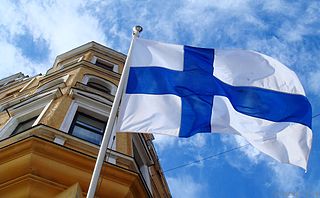
Image: Finnish flag, photograph by Yangtsefly via Wikimedia

In Live and Active Cultures we talk about cultures and cultural differences.