Hannibal’s Route Identified?

160407didrachm In 218 BCE, the Carthaginian general Hannibal led an army across the Alps into Italy, touching off the Second Punic War. On the question of exactly where Hannibal crossed the Alps, there’s always been a lot of, for lack of a better term, horse pucky. The ancient sources are vague and of dubious reliability. In the absence of solid evidence, numerous distinct schools of thought on the question have emerged. There are the military professionals who argue that Hannibal must have taken the easiest, most straightforward route open to him. There are the romantics who insist that Hannibal’s army must have taken a difficult and dangerous route befitting such a momentous expedition. The folklorists are persuaded by local legends in the Alps while the textualists wrangle over which of the literary sources is more reliable. Now some literal horse pucky may be getting us closer to an answer.

The whole route hangs on the identification of two specific points. One is an area called the “island” somewhere in the valley of the Rhone river. The other is the pass by which Hannibal’s army crossed the Alps. While the “island” is still uncertain, recent archaeological work may have identified the Alpine pass. As reported in Archaeometry in March, 2016, a large deposit of horse manure and disturbed soil near the Col de la Traversette indicates the passage of a large number of horses dated to the period of the Second Punic War. If this finding stands up to further scrutiny, it may allow us to pin down Hannibal’s Alpine crossing.

Identifying the Traversette as the pass Hannibal’s army took would have some interesting implications for our interpretation of the war as a whole. Although favored by some scholars (notably Sir Gavin de Beer), the Traversette has usually been dismissed as too high, narrow, and difficult for Hannibal’s army, especially when several lower, wider, easier passes were available within a few days’ march. The military-history school in particular has argued that Hannibal would not have set out on his march without good advance intelligence about the Alpine passes and that intelligence would have persuaded him never to attempt the Traversette. If Hannibal did indeed take his army by the Traversette, it suggests that his advance intelligence was not as good as modern historians imagine (whether because Hannibal didn’t know enough about the available passes or because he allowed his army to get into such desperate straits that he had to take a pass he knew was a bad choice).

If Hannibal’s intelligence-gathering was less than optimal, that would also help to explain the major strategic failure of his campaign: overestimating the central Italian cities’ readiness to cast off Roman hegemony. Hannibal’s strategy against Rome depended on stripping Rome of its allies and conquests. While he found ready support in the areas of northern and southern Italy that had only recently been conquered by Rome, very few cities in Rome’s core central Italian territory were willing to join him.

It’s always important to take new findings with caution. Further research may cast doubt on this new evidence. For now though, the poop looks promising.

Post edited for clarity

Image: Tarentine didrachm struck during the Second Punic War, photograph by Classical Numismatic Group via Wikimedia (c. 212-209 BCE; silver)
Hadrian’s Wall… In Legos!

Brick to the Past is a British Lego-building group that bases their creations on historical landscapes and architecture. One of their builds from last year was inspired by Hadrian’s Wall. The layout combines a stretch of wall, a Roman fortress and town, a milecastle (one of the fortified gateways placed at one-mile intervals), and a native village.

Hadrian's Wall by Brick to the Past
Hadrian’s Wall by Brick to the Past

The buildings are full of delightful details and clever Legosmithing, like the use of a cogwheel over the main door of the bathhouse to represent the wild-haired head that was often associated with springs and baths in Roman Britain, like this fine example from Aquae Sulis (present-day Bath).

The bathhouse by Brick to the Past
Pediment from Aquae Sulis
Pediment from Aquae Sulis, detail of photograph by Velvet via Wikimedia (Bath; 1st c. CE; stone)

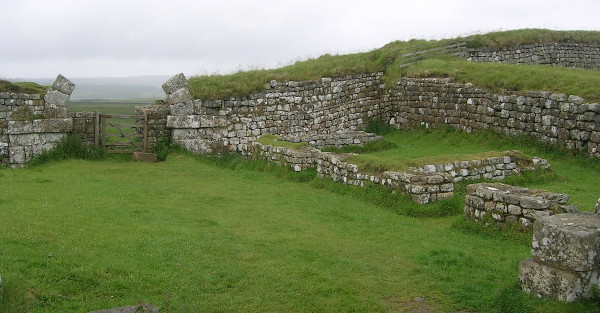
Hadrian would be proud. Here’s a picture of the original, from Milecastle 37. They do kind of look like Legos, don’t they?

Milecastle 37, photograph by Erik Jensen

Hey, look! We found a thing on the internet! We thought it was cool, and wanted to share it with you.

“The Celts” and the Victorian Hangover

160328WandsworthNo, this is not a post about how ladies and gentlemen of the nineteenth century recovered after too many pints of Guinness. Rather, it is about how nineteenth-century ideas about culture and identity have held on so tenaciously in popular history that even now, over a century later, we still have to struggle against them when trying to talk about peoples of the past. One of the subjects that often brings up these outdated ideas is “the Celts.”

Searching for the Celts

Here’s how the Victorian version of history goes. Between 500 and 400 BCE, a new group of people known as the Keltoi to the Greeks or the Gauls to the Romans, whom we call the Celts, emerged in the area of southern Germany, Austria, and Switzerland. From this homeland, they expanded explosively outwards in all directions led by aggressive warrior princes who fought from two-wheeled chariots with long iron swords. They raided Italy and Greece but were prevented from conquering those regions by the armies of the Greeks and Romans. In the west and north, however, the native peoples were far less sophisticated and could not resist the invaders. The Celts conquered France and Belgium, northern Spain, and the British Isles until at the western shores of Ireland their expansion was finally halted by the Atlantic Ocean.

Continue reading

Race and Culture in Hannibal’s Army

160322elephantTor.com published an article online today about diversity in Hannibal’s army written from the point of view of historical wargaming. It is a interesting article and well worth a read, but unfortunately it misses the opportunity to really address questions of racial and cultural diversity in ancient warfare. Here is a quick attempt to address some of the things that were lacking.

Race and culture

Race is a term with a lot of baggage, as we are all painfully aware, but it means different things in different contexts. In modern parlance, it describes a socially-constructed division of human beings into more or less arbitrary categories, largely on the basis of skin color and other physical features. In a fantasy context, it refers to distinct species of intelligent creatures like Elves, Orcs, Dwarves, and so on.

The unaddressed problem in the Tor.com article is the conflation of race and culture. In the nineteenth and early twentieth century, overtly racist theories of history posited that people of different genetic backgrounds naturally had different qualities. Many of these stereotypes still linger in our popular culture: the stoic Indian, the mischievous Irishman, the passionate Italian, etc. This belief in racial character was encoded in early classic works of fantasy like Tolkien’s Lord of the Rings, which gave us the stubborn Dwarf, the ethereal Elf, the vicious Orc, etc.

Even as we struggle to root out this conflation of race and culture from our modern life, it lingers on in works of fantasy and science fiction: the logical Vulcan, the boisterous Klingon, the decadent Centauri, the proud Dothraki. As we look back at history, we have to think of the people of the past not in terms of racial qualities but in terms of cultural contexts. People of different origins often do behave differently, but those differences are explained by the cultures they lived in, not the races they represent.

Continue reading

Fantasy Religions: Sacrilege, Blasphemy, and Heresy

160321SibylWhen creating religions for our stories, one of the things to think about is how the people who follow that tradition respond to offenses against its rules and principles. Is your character running the risk of torture and death if they question the accuracy of the sacred texts, or are they just going to get a stern glare from their grandmother for using the wrong hand to swirl the incense at the family altar?

Just as there are lots of different religious traditions that people practice in many different ways, there are lots of different ways of disrespecting religious ideas and offending the people who hold them. I’m going to talk about three kinds of religious transgression today that are often confused with one another. The differences between them are important, though. Which of these kinds of transgression a society recognizes and how it responds to them reflect important things about its history and religious traditions. These three are: sacrilege, blasphemy, and heresy.

(Or, as we call it my house, Saturday night.)

Continue reading

Making Supper at the Prancing Pony

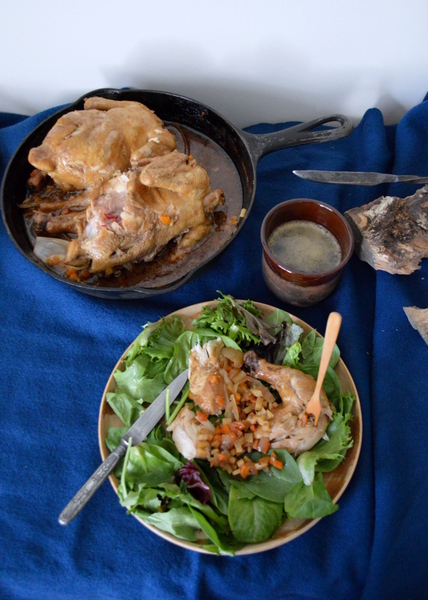
Here’s a look at how we made yesterday’s Supper at the Prancing Pony.

The menu

  • Root vegetable soup
  • Cold chicken and ham
  • Bread and butter
  • Cheese
  • Blackberry tart
  • Beer

erikchef1No meal in The Lord of the Rings is more clearly described than the supper laid on by Butterbur of Bree at the Prancing Pony, and we have stuck to the letter of the description: a hearty vegetable soup and cold chicken and ham served up with bread, butter, and cheese, with home-brewed stout to drink and a blackberry tart for dessert. (1.9)

Continue reading

Connections: Rome and the Arctic

160314glassFrom the city of Rome to the Arctic circle is a distance of about 2,750 km. At its greatest extent, the northernmost tip of the Roman empire was more than 1,000 km from the Arctic. Even across such a distance, however, there were connections. A couple of little pieces of evidence show us how knowledge of Rome could reach the far north, and how knowledge of the far north could reach Rome.

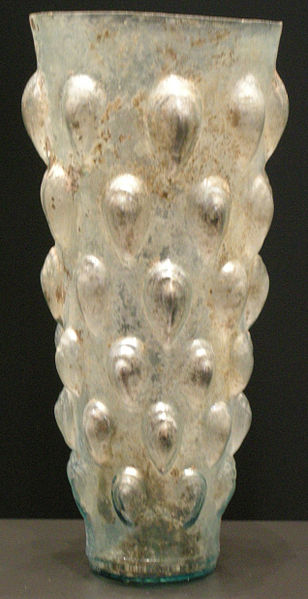
In Føre, Nordland, on an island in far northern Norway, is an ancient burial site. Over several centuries in the late iron age around 10 mound burials were raised of earth and stone. (The number is uncertain because some of the mounds have been destroyed by erosion and farming.) Not all have been excavated, but those that have have yielded the evidence of extraordinary wealth by local standards, including a Roman drinking glass buried in the only female grave so far known at the site. (The glass pictured is of a similar type, but not from the same site.)

It is very unlikely that Føre had any direct connection to the Roman world. Rather it was at the northern extreme of a network of trade and alliances that spanned Scandinavia and the Baltic Sea region which used Roman imports as high-status trade goods and diplomatic gifts. The people of Føre may have had very little idea of what the Roman empire was, but they had some access to Roman goods and valued them as precious objects.

Continue reading

Why White Horus Bothers Me More Than Black Heimdall

In 2011’s Thor, Idris Elba, despite not looking typically Norse, plays the Norse god Heimdall. In 2016’s Gods of Egypt, Nikolaj Coster-Waldau, despite not looking typically Egyptian, plays the Egyptian god Horus. The casting of Elba as Heimdall surprised me the first time I saw the movie, but it has never bothered me as a fan or as a historian. Coster-Waldau as Horus really bothers me and I think it’s worth taking a minute to explain why.

160310HeimdallHorus

I have nothing against Coster-Waldau as an actor. I haven’t seen Gods of Egypt and don’t plan to, so I have nothing to say about his performance in this particular role, but he’s not the problem here. The problem is in the casting of the movie as a whole.

Continue reading

Why I Always Grant Extensions

160303booksAs the middle of the semester approaches and assignments start coming due, the e-mails start coming in. Students start coming to me before or after class or poking their heads into my office between classes. I know what they’re going to ask. Some of them know the word for it; others just know what they need: a few more days to work on their papers and projects. An extension.

There’s always a reason. The flu. Grandmother passed away. Father in the hospital. Car trouble. I know pretty much what they’re going to say before they even open their mouths. And I know what I’m going to say, too: yes. Always yes. I never ask for proof (though my students will often bring me notes and I will look at them out of respect). Anyone who asks can have a few extra days.

I have known professors who take pride in never having granted an extension, or if they do they want to see the doctor’s note and the obituary in the newspaper and they will run the story down like an investigative journalist tracking a political scandal. For them, deadlines are deadlines: the line past which you’d better be dead and have a note from God if your paper isn’t done. I respect my fellow professors who teach this way, but it’s not my way.

Continue reading

Inca Rope Bridges and the Importance of Landscape

The Inca empire of South America was connected by a network of roads used by chasqui runners and pack llamas carrying messages and supplies around the empire. The Inca, creating their empire in the Andes mountains, faced challenges unlike those of flat-land and river-valley empires, among which was the problem of crossing numerous steep mountain valleys and rivers that ran dangerously swift in the flood season. Their solution to this problem was: rope bridges.

160229QiswaChaka

Suspension rope bridges spanned rivers and valleys, the longest reaching a length of 45 meters. They were made with ropes twisted out of grass and had to be rebuilt every year or two. The rebuilding was dangerous work that was assigned to local villagers as part of their obligation to the empire. Most Inca bridges have long since been replaced with modern structures, but one, the Q’iswa Chaka over the Apurimac River in Peru, is still rebuilt every year by local people as a way of preserving their heritage.

Continue reading