Every now and then you read snippets where an overused truism is poked and prodded in a way that nudges something loose.
“His features, his gestures, his long black braid: All these had become as familiar to me as if I had known them my entire life long, yet I had first encountered him only a few days ago. I did not understand it. Was this what kinship meant? A sense, deep in your bones, that the person next to you is part of you? Inextricable from what you are? That you could not be who you are without their existence as part of the architecture of your very self?
“We are none of us one thing alone and unchanging. We are not static, or at rest. Just as a city or a prince’s court or a lineage is many people in one, so is a person many people within one, always unfinished and always like a river’s current flowing onward ever changing toward the ocean that is greater than all things combined. You cannot step into the same river twice.”
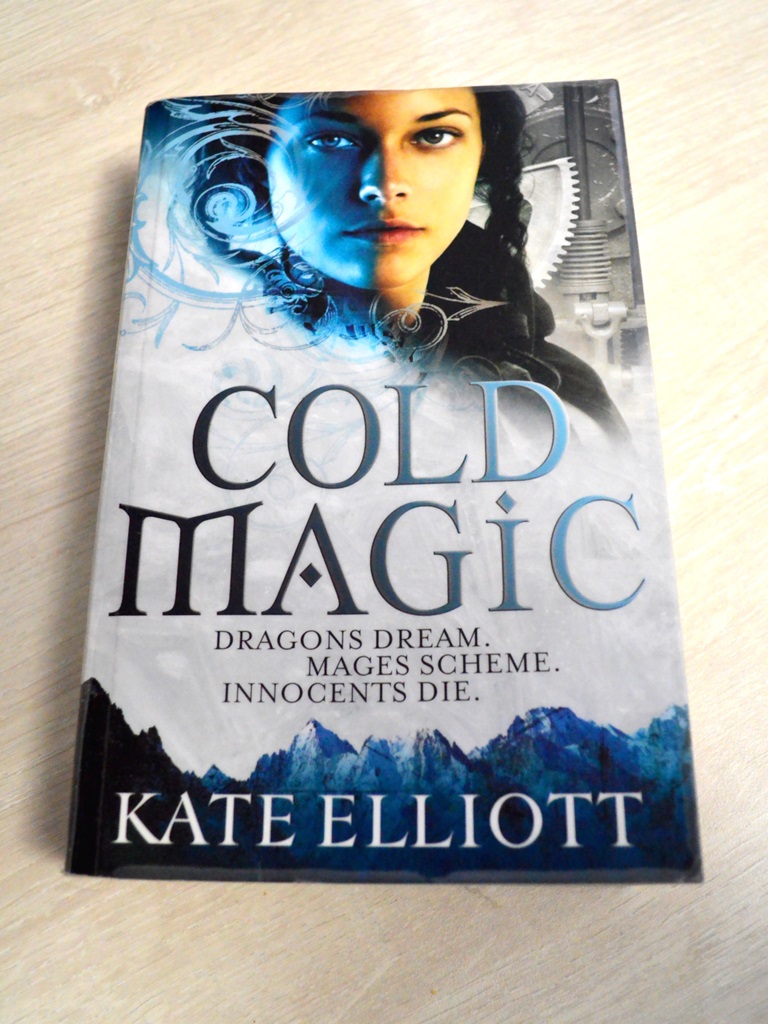
– Catherine in Cold Magic by Kate Elliott
I remember being kinda stunned one time, years ago now, when talking to a coworker and she said she never re-reads books. I find that unfathomable, to be honest. It’s a bit like never eating the same food twice.
Strictly speaking, of course, the two examples are different, since repeatedly cooking the same dishes makes the kind of pragmatic sense that re-reading does not and cannot offer. But if you eat your favorite foods more than once, why wouldn’t you read your favorite books more than once? It’s so exhilarating to gain a deeper or a wider understanding of a work or phenomenon you think you thoroughly know already, because you have changed.
Elliott, Kate. Cold Magic. London: Orbit, 2010, p. 384-385.
Image by Eppu Jensen
Serving exactly what it sounds like, the Quotes feature excerpts other people’s thoughts.
The article is definitely worth a look, especially since (at this writing) it has more photos than IMDB. Way more. And they look great! I mashed up some of them into a collage, below, mostly for my own enjoyment:
We still don’t see much of the company or Corporation Rim even in these first look photos, but it looks dark and imposing (top left in my mashup). I assume the other spaces with orange accents are either the Preservation Aux habitat down on the planet or their hopper, or (less likely) the DeltFall survey habitat.
Readers of Murderbot books know that Preservation is everything Corporation Rim isn’t when it comes to human rights and comfort, and it’s fantastic how the set design has implied that with a paler, more cheerful color scheme and with plants (bottom right in my mashup). Looks like some of them are edible, but some look decidedly decorative.
A tidbit that’s definitely not from the first Murderbot book is revealed by the first look article: “One of the funniest sequences in the series involves […] a human indentured servant who has been alone too long in the reaches of space and makes the mistake of trying to seduce the uninterested security unit.”
Err. Hm. I could see why they’d want to include the scene (as a further hint of how SecUnits in general work), but mostly I can’t see how it could add more than confuse. We’ll have to wait for the series to dissect it further.
The clip doesn’t reveal much, just that Murderbot doesn’t have a bellybutton or nipples.
But the trailer!
(Confession: My very first thought was ‘Murderbot has a stupid voice’—sorry, Alexander—followed by ‘but I’m sure I’ll get over it’.)
The writing team has included Murderbot’s favorite show The Rise and Fall of Sanctuary Moon. For real: we’ll actually get to see some of the show, and it looks fabulous! And what a cast—according to Vanity Fair, Sanctuary Moon stars John Cho, Jack McBrayer, Clark Gregg, and DeWanda Wise.
Also, they’ve kept Murderbot’s inner dialogue—woot!—and the Preservation team looks and feels absolutely bang on. They even have colorful rugs on their mission! Plants and rugs lugged along on a planetary survey—if that doesn’t tell you anything about Preservation’s attitude towards life in general, I don’t know what will.
I’m ridiculously excited about the Murderbot series. (I had to force myself to go back and delete a whole bunch of exclamation marks from this post, if you can believe it!) I really, truly hope it’ll be good, and no-one’s marketing-directored it to death. So far it’s looking promising!
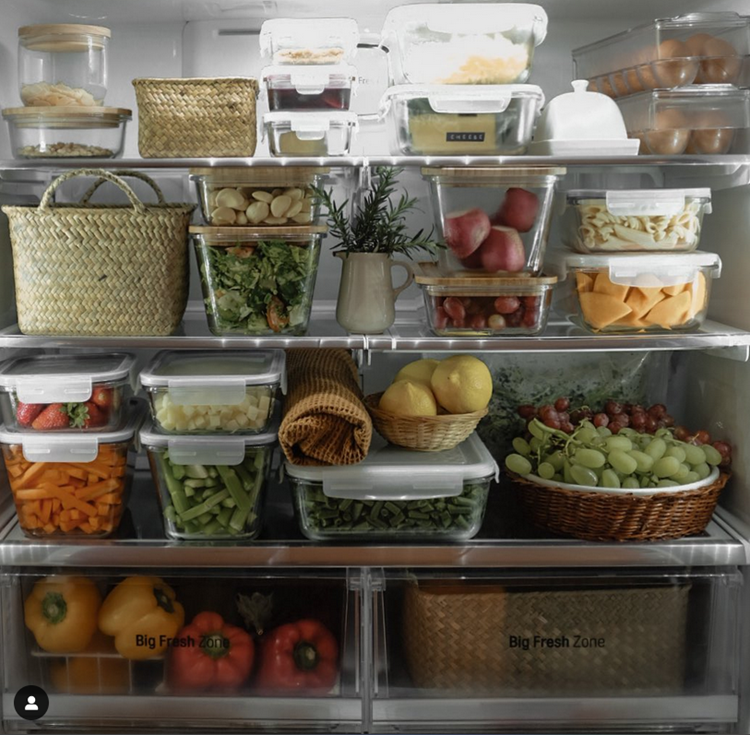
Have you heard of fridgescaping? The phenomenon apparently started on TikTok, and in a nutshell comes from “landscaping” your fridge.
Sounds like some people got into it during the covid lockdowns. There are various approaches to decorating the inside of your refrigerator, and ways to organize are, of course, as varied as the creators.
All of the above are still mainstream. Lynzi Judish (lynziliving) takes fridgescaping to another level. Hers designs are very pretty, lushly styled, and themed. There is, for instance, a Beetlejuice…
However: I have A LOT of questions! I’m not on Instagram or TikTok, and plan not to begin just to do a bit of research. But, like—
I see a lot of snack-type produce. Where do the fridgescapers store their actual food? Food food, the cooked food? (Surely they do cook warm meals…?) Or leftovers?
Are the containers food safe? Please tell me they all are!
Are they ruining the books or photos or decorative boxes placed in the fridge?
Why does everything need to be decanted? (Yes, I know why—it’s the look. However, all those themed empty containers are just more clutter to store elsewhere and more $$$ down the drain.)
How do they keep re-arranging their fridges without wasting an inordinate amount of energy?
Also: While I do enjoy a (thoughtfully) decorated space, for me, function has to come first. It absolutely must; I cannot live otherwise. I have to have a home that works; if it looks good, too, that’s great! But I must be able to use things I need when I need them, not after five minutes of digging or setup. (Which is also why I must have a dedicated sewing room with the machine on a table, ready to go at a moment’s notice.) If a space or area isn’t useable, it’s a source of frustration for me, which isn’t worth it, especially not for everyday functions like the fridge.
(A super-short recap of his post: the song Bara bada bastu, ‘Just having a sauna’, despite representing Sweden, is in fact performed by the Finnish comedy group KAJ. As a result of KAJ’s popularity, Swedes and Finns are finding a new spirit of Eurovision togetherness, and it has also brought some international recognition to the little-known Swedish-speaking minority in Finland.)
Here, as a companion post, is a listing of cultural references in KAJs song and in the performance.
I’m pulling some of this from my own experience growing up in Finland, but others from online commentary, or my Swedish-Finnish friends’ stories. This list is, therefore, likely not to be complete. Additions are very welcome!
KAJ—which rhymes with the English word guy—is made up of Kevin Holmström, Axel Åhman, and Jakob Norrgård, who all originally hail from Vörå, Ostrobothnia, Finland. The idea behind the song is to gently poke fun at how Swedes view Finns and our culture. Here we go! 🙂
Gosh, I never did talk here about the Star Wars cinematic universe series Andorbeyond posting the trailers back in 2022. Long story short: we watched it, loved it, and have seen it more than once. Good quality all round; in fact, it’s my absolute favorite in the Star Wars tv-verse. The only question was how long will it take to make more…!
Finally, finally, there are trailers and a release date for Andor season 2. Here’s the first:
The trailer music is obviously picked for the lyrics, but it’s an odd choice in terms of mood. But there’s dancing, joyous dancing by the look of it, and Cassian cleans up nice. Clearly a lot of rebellious things also happen. Looks, props, and costumes are good, too, from what there is to see. Some new, atypical environments like the grain field grabbed my interest. It’s good to see so many returning faces among the cast.
And the second trailer:
Andor | Official Trailer | Final Season Streaming April 22 on Disney+ by Star Wars on YouTube
The city in a valley with concentric, star-shaped walls is fascinating; I’d like to see more of that. It has the feel of a medieval castle city, except HUGE. Mon Mothma’s growing terror is chilling to watch; Genevieve O’Reilly is one of my favorites in the series, and she continues to do an amazing job.
A pretty tantalizing behind-the-scenes video has also been released:
Ok, wow. I knew from elsewhere that season 2 will cover multiple years, but somehow I’d missed that the events here, over four years, take us into Rogue One. Sounds too fast, almost, but we’ll see how skillfully they’ll create the overall arc.
Season 2 of Andor is set to stream on April 22, 2025, with a three-parter of a premiere. This time it seems the episodes are grouped and released in threes, with the final bunch released on May 13, 2025. We’ll definitely have to spring for another few months’ worth of subscription.
Hey, look! We found a thing on the internet! We thought it was cool, and wanted to share it with you.
One of the most prominent topics currently is artificial intelligence. Of course everyone knows—or should know—it’s not real intelligence as we generally understand it. The term seems to have some real staying power, though.
Regardless of what one wants to call the current iterations, machine learning or algorithm-based systems appear to be here to stay. People are starting to figure out what they could be used for in everyday life, not just at the office or lab.
One popular sentiment among creatives goes along the lines of: I want AI to do the dishes for me so I can create, I don’t want AI to create for me so I can do the dishes. I hear you, fellow creatives, and agree! This post talks about what I’d want those systems to do for me. (Eventually. We still must solve several issues, e.g. how to program them without egregious copyright breaches, to mention just one.)
(Please also note: I do realize that computing takes a lot of energy and materials, and that energy production and extraction of minerals aren’t unproblematic processes. Also, the ethics of the current generative models need serious attention; I’m still fuming over Meta’s massive book pirating as revealed by The Atlantic. The point of my post is not to dwell on the problems, however. This is basically just a random, long-winded wish list.)
TL;DR: My preferences boil to complex tasks, specificity instead of generic sludge, and effective analysis of massive amounts of data.
Below is a non-comprehensive list of some specific tasks I want done better, whether by “AI” or not, in no particular order.
For a while, there have been rumblings that World of Warcraft characters will get a new home base of sorts, perhaps a little like garrisons in the Warlords of Draenor expansion. This new system has been dubbed housing.
In a news article “A First Look at Housing” from February 2025, Blizzard describes some of their design priorities: customization (adjusting the widest possible range of features in your house), ability to socialize (unlike garrisons, player housing is supposed to encourage interacting), and longevity (like pet battling or transmog, it is here to stay).
In addition, it’s designed to scale with the player’s interest, namely spending as little or as much time as you want on housing. However, they didn’t yet say whether it’s possible to skip entirely. If, as it’s likely, there will be introductory quests to unlock housing, it should be a simple matter to just not do anything house-related.
I mean, I am one of those geeks who will want to dive in right away and fine-tune things to my heart’s content. But not everyone cares about the same kinds of gaming. (I’m still miffed at Blizzard trying to force pvp on all players. Nope, that won’t happen; I refuse, and if it means I won’t see some of the story or get certain rewards, then I won’t. Anyway.)
To begin with, Alliance will apparently have one housing zone (inspired mainly by Elwynn Forest, with some Westfall and Duskwood sprinkled in) and Horde another one (inspired by Durotar, its coastline, and Azshara), with “more possible places to live in the future”.
It’s still unclear how the system will work exactly. For example, how players will access their zones and the houses within has not yet been revealed. What we do know is that “[y]our houses are also shared amongst your Warband with your different characters being able to come and go” regardless of faction, and that “[h]ousing rewards are also shared across your Warband”. But does that mean we can have, say, multiple Horde houses and no Alliance ones at all? They do use a plural in your houses. Or are players limited at launch to one on the Horde and another on the Alliance side?
It seems there are also two decoration themes, one dubbed folk (which looks a little more Alliance-flavored) and the other rugged (more Horde style). Whether we’ll be able to mix and match items between the themes is still unclear, though. It’s reportedly been confirmed that players will be allowed to mix and match aesthetics.
The ability to visit your friends’ or guildmates’ houses sounds fabulous. But in addition to housing zones, there are also neighborhoods, which are instanced and can be either public or private, with room for 50 houses. That raises more questions—what about houses within a public neighborhood? (Or private, for that matter.) Is just anyone able to walk right in, or will there be some limits at the plot boundary (like in a real-life town)? Will we be able to name our private neighborhoods? Or houses? What will happen to cities—will everyone just decamp to housing zones when not conducting, say, auction house business, visiting a barbershop, or training? Can we pull out mounts in housing zones? Will there even be a reason to visit an auction house in a city, if your mount can provide for you?
Currently decoration edits are divided into two modes, basic and advanced. While the basic mode allows you to quickly place items in a, well, basic order, the advanced mode barely restricts you: the post “A Look at Housing Interior Design” from March 2025 says that “[i]nternally using this, [Blizzard] employees have taken bushes and made them into garland [sic] for their fireplaces, constructed a boat’s prow from a bed, or made paint buckets into small spice racks for their kitchens.”
There’s a short compilation video of some work-in-progress customization options:
Looks absolutely fantastic! Even if all of the assets might not work exactly like this in the final version, it looks like there will, indeed, be a massive amount of details you can tweak, from floorplan to moving windows to placing objects on top of others to adjusting some of the colors, and more.
Another fantastic (literally!) feature is that the house interiors will not be limited by the exterior footprint. (Think of the mage tower in Stormwind.) Apparently the inside can also follow a different style than the outside, but more than that we do not yet know.
I find this concept of player housing very exciting! I’m tracking the release info, so I’ll know when to block time off in my calendar and what real-life events I might have to work around. At the moment there’s only speculation, though. The most specific I’ve seen so far is prior to the next expansion (WoW: Midnight) maybe around mid-December, while “winter 2025” is confirmed but still aggravatingly unspecific.
It’s currently also unclear whether players will be required to purchase Midnight in order to access housing.
Ohwell. As long as it’s actually a good system, I can wait. But it would be a treat to get to play in new housing over the Christmas break, wouldn’t it?
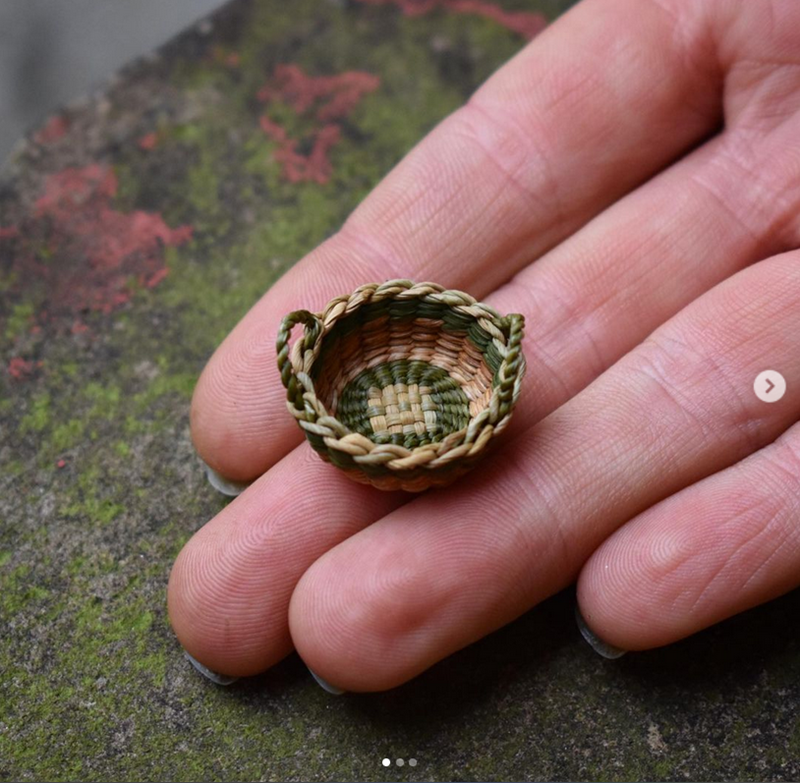
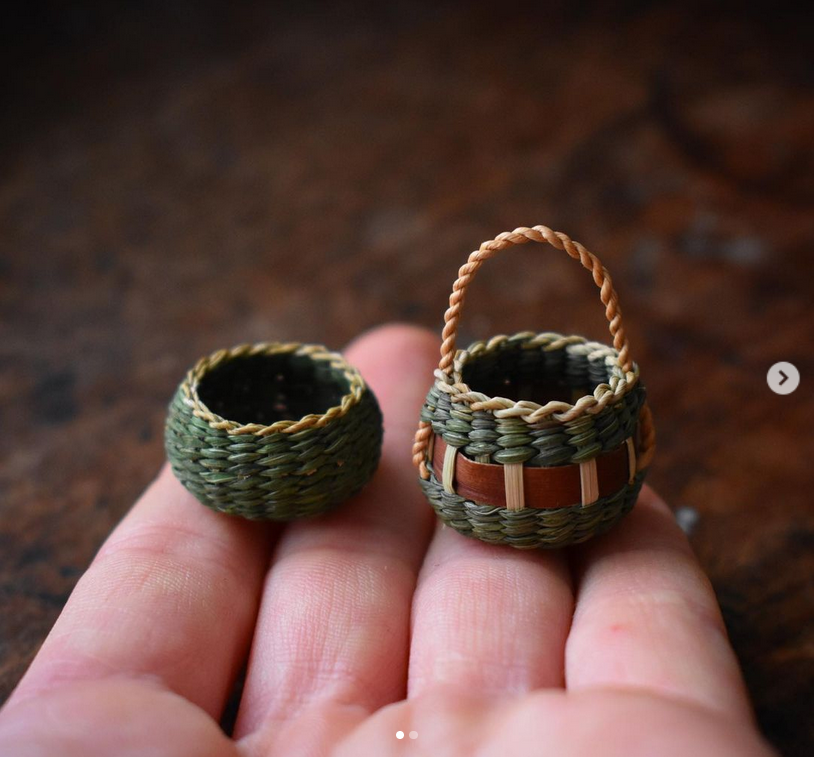
Artist Suzie Grieve harvests materials from the local woodlands and fields in the Lake District, U.K., with a focus on the weeds and invasive species, and weaves baskets out of the fibers. And they are very neat and beautiful:
The twist? Some of her baskets are not just neat and beautiful, and they’re not just small, they’re tiny. T I N Y!
Even if these baskets were of a more typical size, they would be impressive: the careful selection of materials to create stripes from naturally different colors, the planning and placement of patterns to create a pleasing whole, and the high quality of the work.
Then you shrink everything down to mere millimeters and centimeters, and the challenge grows larger. MUCH larger! I’ve done enough small-scale sewing to comprehend some of the challenges involved when scaling down the size of a project.
This is seriously impressive work requiring skill, imagination, and dedication. Kudos!
If I ever heard of a Red Sonja reboot project, I must’ve immediately forgotten it, for the fate of movie projects is unknowable and often fickle, and that is multiplied for genre projects starring women.
Now, though, it sounds like Millennium Media’s Red Sonja is due for release later this year in the UK and Ireland. This version is directed by M.J. Bassett and written by Tasha Huo and Roy Thomas on the basis of Robert E. Howard’s original comic book characters. Matilda Lutz plays Sonja.
I hazily remember the previous adaptation from 1985 starring Brigitte Nielsen. ‘Twas the time when there were so few SFFnal movies and tv series in the boonies where I grew up that you pretty much had to see everything coming your way if you wanted to see anything. If I recall, it was like the 80s Conan adaptations—Conan the Barbarian in 1982 and Conan the Destroyer in 1984—which is to say pretty campy, but attempting very, very, very earnestly to bring epic fantasy to screen.
Bassett’s version is filmed in Bulgaria and Greece, and reportedly will have a different tone from male-gaze versions of the character. While both of these details sound promising, and while I would love to see more genre projects led and directed by women, somehow I seem to doubt the movie will be released on the big screen here in Finland. We’ll see.