The new Doctor Who season started this past weekend, on Sunday October 07, 2018. The big thing, of course, is that Jodie Whittaker makes her doctorial debut in season 11! I have some thoughts on it. But first, the official trailers:
I get chills from both! 😀 Although the music choices for trailer 2 seem a little odd—I suspect I might be missing some cultural references here.
I haven’t seen the first episode yet, so I only have previously shared glimpses, various reports, and other people’s reactions to go by. Reading to the rescue, then! Below are quotes from some of the most interesting writeups I found.
Spoiler warning is in effect! (Also, because some quotes are quite long, I’ll pop the rest behind a cut.)
I was browsing some Doctor Who reading on the latest iteration of the Doctor herself when I saw this photo of Jodie Whittaker in costume:
The new Doctor Who is– a WoW gnome?!?
😀
Images: Jodie Whittaker as the Doctor by Sophie Mutevelian / BBC Studios 2018 via TV Guide. World of Warcraft screencap cropped from one by Cindy on LiveJournal.
We haven’t talked about music lately. Time to fix it!
One of the new allied races in Battle for Azeroth, the latest World of Warcraft expansion, is Dark Iron Dwarves. (Note: I don’t think there’s much actual info as of yet, but people have been gathering mentions at a Wowhead thread.)
As I’ve mentioned before, female Dwarves are my absolute favorite race / gender combo to play in WoW, so I’m going to want at least one. 🙂 Consequently, my WoW thoughts have revolved heavily enough around Dwarves to push into the real life in the form of music befitting these mountain-dwellers.
Below are some of my current most favorite Dwarf-ish pieces, whether originally something quite different or composed specifically with Dwarves in mind.
“Beware! Beware! For the wind blows high. Blood will rain down on men’s bared bodies. Point and edge will share all men’s inheritance, now that the sword-age cuts sharply upon us.”
To my mind, the lyrics are very reminiscent of Vikings or Anglo-Saxons, but I could also see them applying to a fantasy race in WoW. (After all, the game is called World of Warcraft.)
This version of the old Christmas carol “Masters in This Hall” from the album A Feast of Songs by Barry and Beth Hall also reminds me of Dwarves because of the steady rhythm and low key.
The next is a bit special. A music-heavy version of The Lord of the Rings was produced by the Finnish theater company Ryhmäteatteri in 1988 and 1989. Bilbo’s song “I Sit Beside the Fire and Think” from The Fellowship of the Ring, book 2, chapter III (“The Ring Goes South”) was turned into a song for the play, and it’s wonderfully meditative and solemn.
The lyrics were originally translated into the Finnish version (Taru sormusten herrasta) by Panu Pekkanen; for the play they were slightly modified. The melody was composed by Toni Edelmann and sung by Timo Torikka.
This next piece was made by Simon Swerwer for the 2012 computer game Dwarf Fortress:
Lastly, Neil Finn’s “Song of the Lonely Mountain” (the end credits song for Hobbit: An Unexpected Journey) because of the bittersweetness, melancholy, and—just perhaps—glimmer of hope that comes through.
“Features authentic detailing, an opening mouth and flapping wings.
“Also includes a display stand with decorative fact plaque and an extra porg mini build.
“Porg without stand stands over 7” (19cm) high.
“Display stand measures approx. 2” (6cm) high and 1” (3cm) deep, and over 4” (11cm) wide.
“Relive fun porg adventures from Star Wars: The Last Jedi.”
Otherwise it sounds fine and dandy, but does anyone else get an odd vibe from “fun porg adventures”—like being roasted by Chewbacca?!? The marketing department didn’t quite succeed with this particular copy.
Other than that, this almost makes me wish I’d kept my old Legos. Almost—it’s a little too specialized to use inventively in other builds.
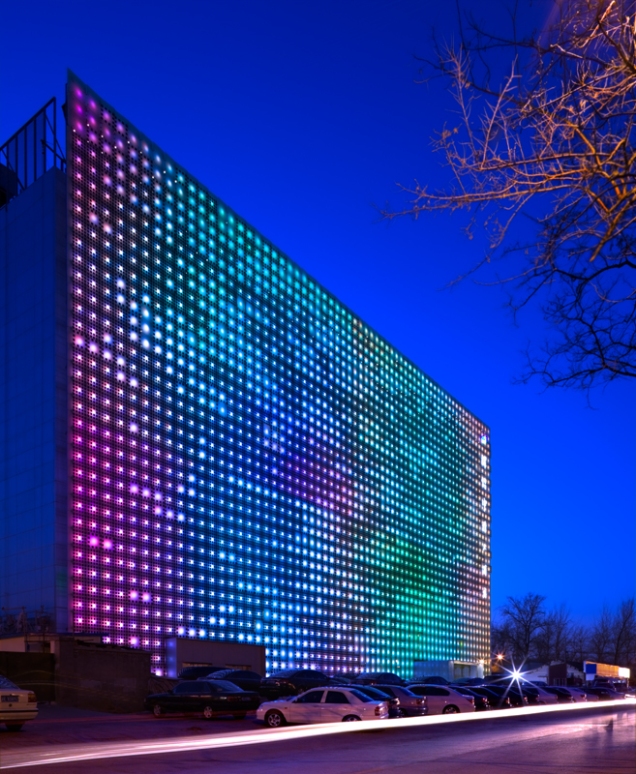
Solar power technologies are advanced enough that they are increasingly being integrated into buildings during construction, not just added onto existing ones. For example, there’s a way to make thin enough, light-weight enough, and transparent enough solar cells to embed them into windows. Some cells even have color, which makes inventive facades a definite possibility!
Below are some colorful glass facades and/or windows, some actually photovoltaic, others made from regular glass or other sun control materials, to illustrate just a few possibilities SFF creators might want to consider.
SwissTech Convention Center in Ecublens, Switzerland
Using dye-sensitized solar cells or DSSC (also known as Grätzel cells), the world’s first multicolored solar facade was built at Ecole Polytechnique Fédérale de Lausanne (EPFL) in Switzerland. Although the technology is 30 years old already, the building is only from 2014.
Biochemistry building at The University of Oxford in Oxford, UK
The facade is made up of glass fins that emulate the colors of the historic buildings surrounding it.
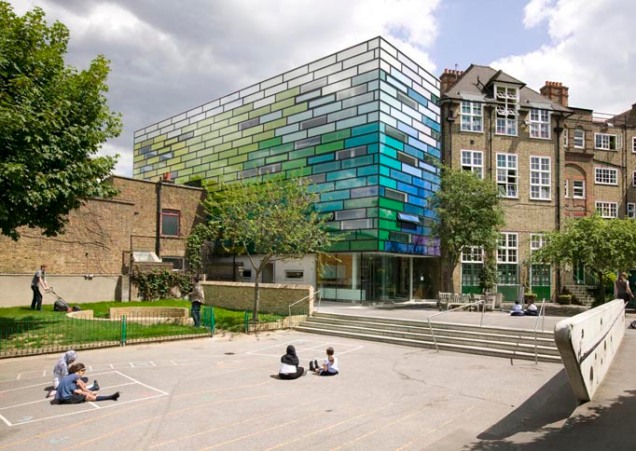
Clapham Manor Primary School in London, UK
A new wing added to an existing Victorian school. No solar glass as far as I can tell, but the combinations of solid and fritted, on one hand, and clear and colored glass, on the other, allow for some environmental control.
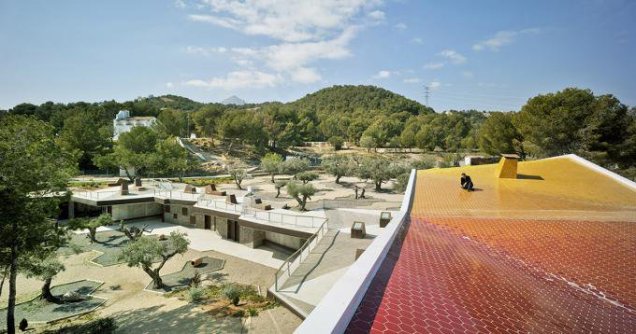
Environmental education center El Captivador in Alicante, Spain
Designed by CrystalZoo, the roof tiles of the sustainably built environmental education center flow from bright reds via oranges to yellows.
An atrium with semi-translucent photovoltaic ceiling panels plus regular colorful glass (as far as I can tell).
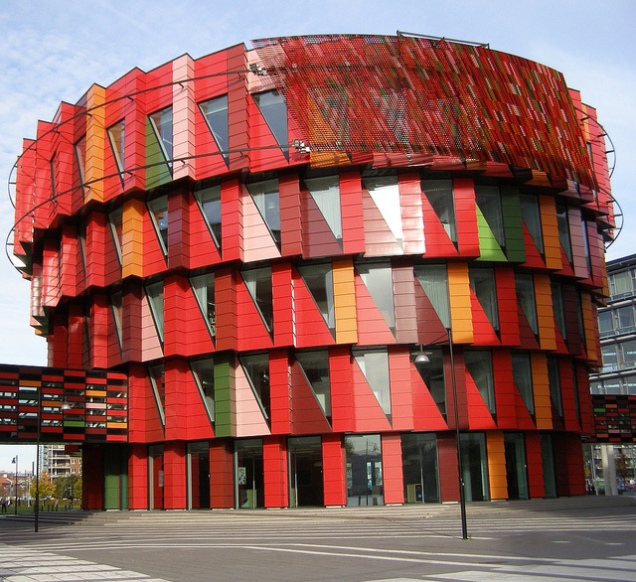
Kuggen building, Chalmers tekniska högskola in Gothenburg, Sweden
Designed by Winngårdh Arkitektkontor for the Chalmers University of Technology, Kuggen has a movable sunscreen and six floors, each shielding the floor below.
At the moment, it seems that next to cost, fairly low efficiency is the biggest problem with building-integrated photovoltaics. (Although, the efficiency problem might soon be solved.) Fortunately, both are something that SFF writers can easily deal with. 🙂
The Visual Inspiration occasional feature pulls the unusual from our world to inspire design, story-telling, and worldbuilding. If stuff like this already exists, what else could we imagine?
“All that was left of a person’s life was recorded on paper, in annals, in almanacs, in the physical items they produced. To end that was to end their history, their present, their future.”
– Aster Grey in An Unkindness of Ghosts by Rivers Solomon
…Which is why the attitudes and words of those writing our world’s history matter; why social sciences, humanities, and languages matter (and not just STEM); why diversity, inclusion, and empathy matter.
Solomon, Rivers. An Unkindness of Ghosts. Brooklyn, NY: Akashic Books, 2017, p. 327.
Serving exactly what it sounds like, the Quotes feature excerpts other people’s thoughts.
Okay, granted, it doesn’t show much yet beyond glimpses. I know nothing of the comic book version of Carol Danvers to begin with, nor do I know whether a rumor saying the movie won’t be dealing with her origin story is true or not. What impressed me, though, is how much the trailer highlighted her determination, standing up time and again after falling down.
It was also great to see younger, sprightlier Nick Fury. Not to mention Coulsooooon!
(As an aside and half-serious at that: as someone who’s going to turn into a little old lady at some point, I hope there’s a darned good reason for Danvers’s punch!)
Last, a LOUD-AS-HELL YAY for no boob armor, nor sexy boob-butt-thigh poses. Frickin’ finally!
The movie opens March 8, 2019. Can’t wait!
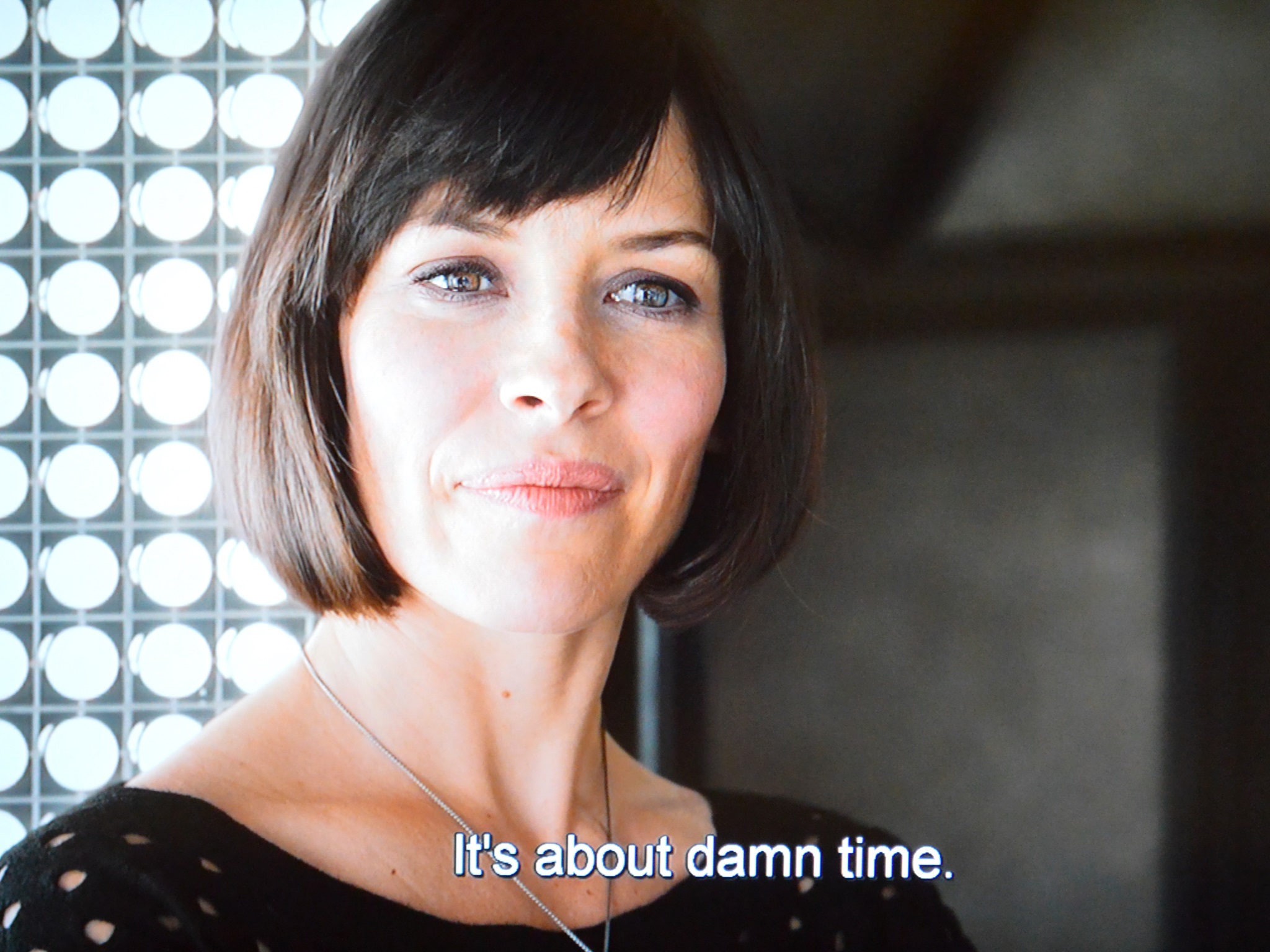
Images: Tom Hiddleston as Loki whee gif via a comment on io9.com. Gifs of Cobie Smulders as Maria Hill from The Avengers’ blooper reel via The Playlist on Tumblr. Evangeline Lilly as Hope Van Dyne screencapped from one of the stingers at the end of Ant-Man.
Hey, look! We found a thing on the internet! We thought it was cool, and wanted to share it with you.
I was browsing my WoW screencaps for something entirely different when my eye fell on two shots from the Dalaran inscription trainer’s place. (This is in the Legion version of Dalaran.) Both are actually from inside the book-filled cupola: the first looks up towards the impossibly high ceiling, the second down towards the trainers’ room floor.
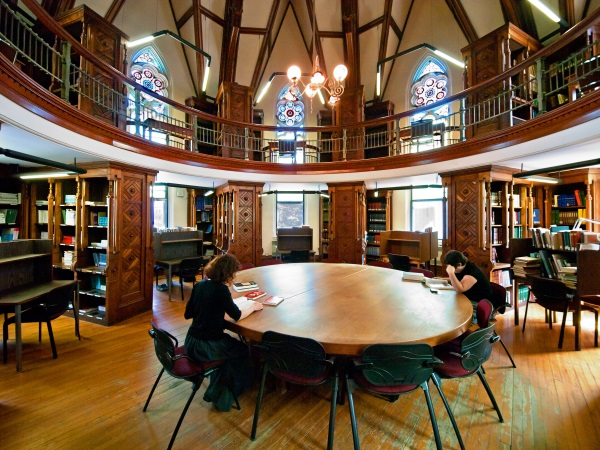
Neat, right? Well, I wondered whether anyone’s actually done anything similar for real and hit the Internet. And I found some!
The library is situated in the neo-Gothic Morrice Hall building that previously housed the Presbyterian College of Montreal from 1871 to 1961.
None of them are exactly the same as the game library cupola, of course: apart from the the scale of the rooms, the scale and direction of the bookcases might differ. But apparently it isn’t terribly far-fetched to make a round multi-storey library and pack it chock-full. 😀
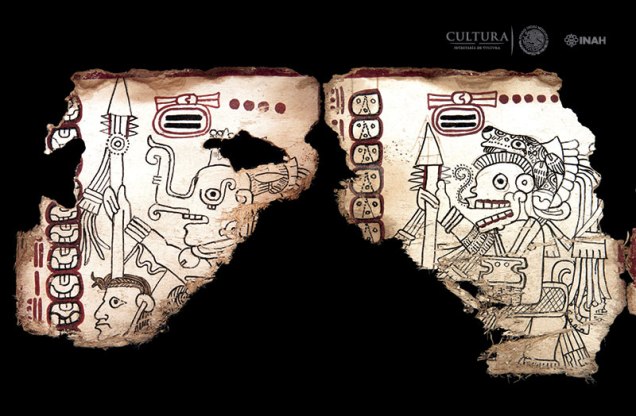
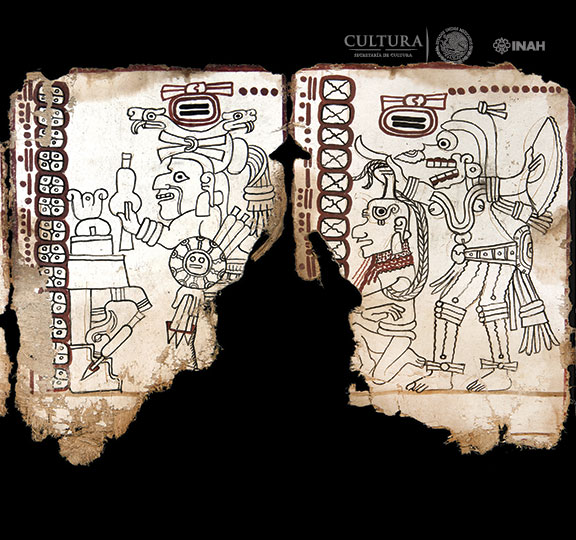
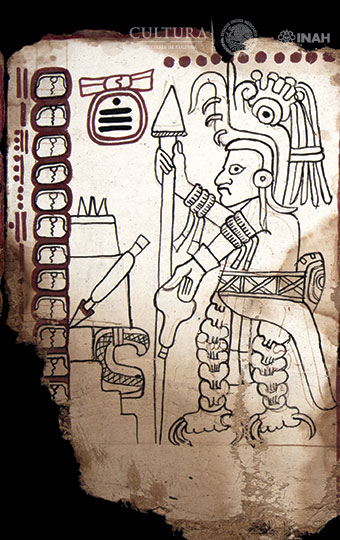
The pictographic calendar-style text was made between 1021 and 1154 CE, and is the oldest known pre-Hispanic manuscript from the Americas. It was made from three layers of amate paper (bark paper). Only 10 pages of a conjectured set of at least 20 sheets currently survive.
The document’s authenticity was questioned on the basis of two main concerns: missing archaeological records of its original context (due to it having been looted and traded), and its differing style compared to other authenticated Mayan codices.
According to Sofia Martínez del Campo from the National Coordination of Museums and Exhibitions (Coordinación Nacional de Museos y Exposiciones del instituto, or CNME, at INAH), quoted in the INAH announcement, the current analysis included making a detailed photographic record, as well as examining the dating, materials, entomology, iconography, chemical-mineralogical characterization, morphometry, chronology, style, and symbolism, among others.
The specialists found the presence of Maya blue color (azul maya) and pigments based on cochineal dye as well as leftover drops of a chapopote resin. (Britannica says: “[…] chapopote [was a] a native asphalt commonly applied to clay figurines as a decoration; occasionally, chapopote entirely covers the figures, while in other examples it is used to decorate only the face, mouth, or eyes.”)
In addition, INAH announced that the folding book will no longer be known by its previous name (Grolier); instead, the work will be known as Mexico Maya Codex (Códice Maya de México).
The Mexico Maya Codex will be shown to the public for one month, from September 27 to the end of October, 2018, as part of the International Book Fair of Anthropology and History (Feria Internacional del Libro de Antropología e Historia, or FILAH).
Also during the FILAH book fair the book El Códice Maya de México (The Mexico Maya Codex) will be released. It will include a facsimile edition of the pre-Hispanic text in addition to academic and scientific articles.
Only three other pre-Hispanic codices are known, called Madrid, Dresden, and Paris (for the cities where they are kept).
Apparently someone somewhere deemed an earlier analysis (reported e.g. by the Smithsonian.com in September of 2016) not conclusive enough, even though that one also authenticated the Mexico Maya Codex. (My Spanish isn’t good enough to spot any specific reasoning for the 2018 study in the INAH announcement.)
In any case, getting more information on traditional Maya religion and life before Europeans destroyed it can only be a good thing in my book—if you’ll pardon the pun. 🙂
Images of individual pages by Martirene Alcántara; laboratory analysis by Alba Barrios-Laboratorios, INAH; all via INAH.
Out There is an occasional feature highlighting intriguing art, spaces, places, phenomena, flora, and fauna.
I love geeks and nerds, and being a geek / nerd. Sometimes it occurs to me, though, how terribly odd it must look like seen from the outside. Exhibit 6,430: the exchange below that Erik and I had last weekend:
Me: *mumbling to myself, trying to remember a detail from Star Wars*
Me: Han Solo
Erik: … I don’t know what that’s about, but I’m okay with living in a house where a random “Han Solo” is a thing that happens.















 Co-Geeking
You must be logged in to post a comment.