In no particular order. Spoiler warnings in effect.
Erik’s random thoughts:
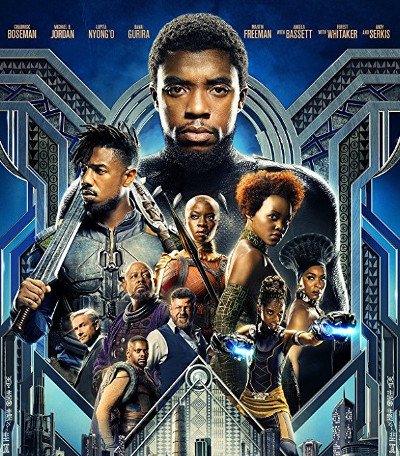
This is the movie that Thor was trying to be: a Shakespearean family drama about an exiled hero coming to terms with the destiny of his people and his father’s failures in the midst of a gorgeous futuristic city-state. (On a side note: does anyone actually remember the original Thor movie or have we collectively agreed that the franchise starts with number 3?)
I love the architecture of Wakanda. It looks like the product of thousands of years of African tradition with the highest of modern technology, just as it should.
Even for a fantasy of African exceptionalism, the story does not shy away from the bitter real history of imperialism, exploitation, slavery, and its modern-day consequences, and the movie is richer and stronger for it.
Shuri is awesome. Her combination of flippancy in the face of tradition, passion for technological tinkering, and powerful love for her family and home make her a delight to watch. I think she’s my favorite character in the whole movie, and that’s not an easy pick in this one.
Could we have T’Challa and Shuri take over the Tony Stark role in the Marvel Universe, please? I appreciate what Iron Man did to kickstart the MCU and hold the early installments together, but I’ve had enough of him now. I honestly don’t think I can handle onemoremovieaboutTony Stark’semotional issues. T’Challa can be the guy in the super suit who cracks wise while leading the fight and Shuri can be the tinkerer who keeps upgrading everybody’s gear.
Even in a franchise that includes a movie about waking up one morning to discover that literal Nazis have taken over the US government, Black Panther feels like the movie we most need in 2018: a meditation on the temptations of division, resentment, and revenge and the hard choice of embracing a flawed and fractured world with hope. As crucially as Black Panther contributes to the representation of black people in genre media—and by Bast it does—it has a lot to say outside the dialogue of race as well.
For the record: as a white man, I have no problem whatsoever identifying with the characters of this movie. I’m not talking about Martin Freeman’s Everett Ross, either—Zuri is my guy.
Eppu’s random thoughts:
Note: These thoughts are based on one viewing. I’m fully aware that some of them are just scratching the surface and that I need to see the move (at least!) a second time and mull things over properly.
If I had to use one word to describe Black Panther, on a meta level it would be confelicity: I am so, so, SO glad for those black people who are exited, overjoyed, and exhilarated over seeing a full cast of people that look like them acting with grace and agency, not minimized but celebrated! On a story level, I’d use equality.
I knew from reading non-spoiler reviews beforehand that the movie passes the Bechdel test, so I didn’t even bother tracking it. It was very nice not to have to care.
If it was nice not to have to care about whether the Bechdel test passes or not, it was outright GLORIOUS to see that WOMEN ARE PEOPLE in their own right, with their own interior lives, not just breasts and posteriors for men to ogle. And such a spread of different women, too, each doing their thing according to their interests and skills. Because that’s who we are, and what we do, and have done for millenia, and it’s damn time that the self-absorbed, able-bodied, white cis hetero men in Hollywood respected that. (Yes, I know that the Black Panther team behind the camera included many, many people of color, including women, but that’s not the default, is it.)
And of course it’s not just that women are people in their own right, but that there are so many diverse black women. Have you any idea what a disservice (to put it mildly) your typical Anglo-American fiction does to women of color, especially black women? I didn’t until I started paying attention. It’s atrocious and shameful.
Black Panther was visually beautiful. Beautiful! It was so beautiful my brain experienced a moment of “this looks wrong” when stepping out of the movie theater into the dim and snowless February evening in Massachusetts.
Also, the sets and costumes were breathtaking just like I thought. Everything looked like it was produced by a living culture, with layers of history and development alike.
OMG, the tech. Those dragonfly helicopters! Attack rhinos! I kinda want those 3d phone calls! No—scratch that. The maglev trains and über-advanced health care. Like now.
The opening sequence (T’Chaka voiceover telling a story to young T’Challa) and the end credit visuals I thought nodded back to the superhero fight statue end credits for Avengers: Age of Ultron. Yet neither ever lost sight of the fact that they were for and about Black Panther.
A superhero movie with a male lead confident and mature enough to listen to others ROCKS! (Hat tip to Justina Ireland for pointing out T’Challa’s ability to listen as a core personality trait.)
I liked Martin Freeman’s character Everett Ross in this movie. He started with “I know what I’m doing, piss off little people” claptrap. In Wakanda, however, he quickly—and without too much whining—realized how out of his depth he was and spent a good while looking and listening and learning. In the final battle, he redeemed himself to some extent in my eyes when he hopped back into the fighter jet holo-interface to destoy the final cargo plane after he’d discovered that the base he was sitting in was under attack and that there was less than a minute before the gunfire broke through. And never, ever was he written or played as a Mighty Whitey.
It was also good to see a thoroughly accomplished man (T’Challa) grapple with impostor syndrome (not ready to be King). We don’t see or hear much of that; mostly it’s women who are saddled with it in the public discussion.
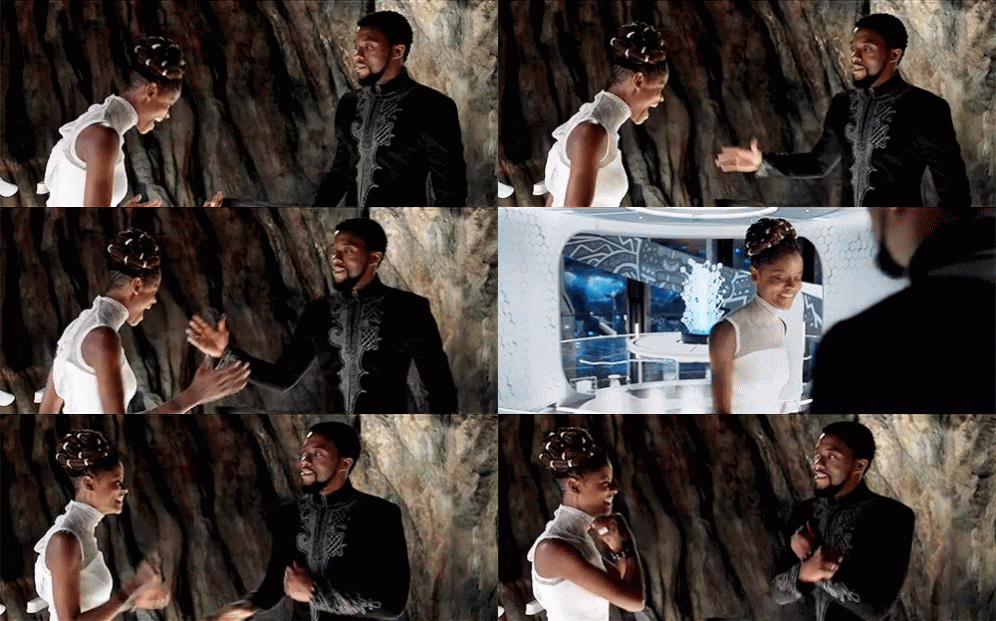
I liked T’Challa’s relationship with the rest of his family members, but I LOVED every moment between him and Princess Shuri. They so clearly love and respect each other as equals—with different skill sets, sure, but equals nevertheless—plus jostle around like real-life siblings.
Finally, all of the acting was so good. I won’t miss Andy Serkis’s character. At. All! Props to Serkis, his incredible performance made the dude truly terrifying and disgusting, but I’d rather watch the competent and kind Africans, thank you.
“What’s remarkable is the way ‘nerd’ is such a badge of honor now. Growing up, I’m sure I wasn’t the only kid who read Spider-Man comics and learned how to do the Vulcan salute, but it wasn’t like it is today. I get the sense that today’s young people are proud to be smart and curious, to design new things, and tackle big problems in unexpected ways. I think America’s a nerdier country than it was when I was a kid—and that’s a good thing!”
– President Barack Obama
Smart and curious people designing new things and tackling big problems is exactly what’s needed at the moment. Proud of my fellow geeks and nerds!
Ransom, Cliff. “President Barack Obama on How to Win the Future: Questions and Answers with Popular Science.” Popular Science
This post has been edited.
Serving exactly what it sounds like, the Quotes feature excerpts other people’s thoughts.
“Science fiction came into being in response to a new thing in human history: the understanding that not only was the world changing, but also that the rate of change was speeding up. That in a normal lifetime, you could expect to experience multiple episodes of rapid, disorienting change. Science fiction at its best has always been about examining and inhabiting those experiences when the world passes through a one-way door.
“Modern science fiction grew up in the Great Depression and flourished in World War II. It thrived in the strangeness of the 1950s and the different strangeness of the 1960s. It has continued to be an essential set of tools for engaging with our careening world.
[…]
“And I really do believe that science fiction and fantasy storytelling makes us, in some fundamental way, a bit more practiced in the ways of a world caught up in wrenching change—and more open to imagining better worlds that might be possible.”
– Editor Patrick Nielsen Hayden
Like I wrote in my Arrival Recap: I explicitly do not want all of my reading and viewing rehashing the same old stories over and over, because SFF is explicitly about examining other possibilities.
The Roman emperor Claudius walked with a limp, spoke a with a stutter, and sometimes experienced sudden and uncontrollable movements of his body. These effects were moderate when he was calm but became more pronounced when he was agitated. Claudius’ symptoms are well documented and modern scholars have suggested various diagnoses. Polio was at one time the preferred explanation but has fallen out of favor. More recent suggestions are cerebral palsy and Tourette syndrome.
If he lived today, Claudius could be diagnosed and receive appropriate treatment or accommodation. The systems we have now to describe various disabilities helps us to recognize an individual’s particular set of symptoms as part of an identifiable condition or disease. Knowing what to call things, where they come from, and how to treat or accommodate them makes a difference to how we handle individual cases. In antiquity, all anyone knew was that Claudius behaved strangely in ways that no one could explain.
Lack of labels and explanations does not mean that people did not live with all the same things we live with today. Some are obvious. Romans may not have been able to explain why Claudius’ distant relative, the censor Appius Claudius Caecus, went blind, but there was no doubt about the state of his vision. Other conditions are less obvious, but no less real.
We have only very recently learned to recognize the chronic traumatic encephalopathy experienced by sports players who receive repeated trauma to the head, for example, but brains are not more vulnerable now than they were in past centuries. For most of the past several thousand years, war has meant large numbers of people repeatedly hitting each other in the head, with or without helmets. CTE and the changes in behavior that go with it must have been part of the experience of pre-modern warriors, whether they knew how to identify it or not.
Post-traumatic stress disorder is also a modern diagnosis, but people have always experienced traumatic stresses, not just in warfare but from violence within families and between individuals, sexual assault, and life-threatening accidents. In any population that has experienced such stress, some individuals will experience aftereffects, whether they have a name for them or not.
Similarly, we have only recently (in historical terms) learned to diagnose autism and related conditions, but people have lived with them throughout human history. The same can be said of Alzheimer’s disease. Many people who are described in historical sources as “simple-minded,” “senile,” etc. may have been living with one of these conditions.
Even when people couldn’t name or explain the disabilities and conditions they lived with, their experiences of life could be profoundly shaped by them. Claudius’ family considered him an embarrassment and kept him out of public view. He himself reportedly exaggerated his symptoms and avoided the public sphere when he was a young man to keep himself from seeming like a threat to the rest of the dynasty, which may have helped him survive the murderous palace intrigues of the early empire. When he unexpectedly became emperor after the assassination of Caligula, though, his lack of experience in public business made his claim to the title precarious. To improve his reputation, he initiated the Roman conquest of Britain. Claudius’ condition, whatever it was, ended up affecting the lives of thousands of people.
Thoughts for writers
Historians and writers of speculative fiction are in a similar position: we spend our time thinking about a world in terms that the people living in it would not, perhaps even could not, think of themselves. No historian can suppose that Romans simply didn’t experience post-traumatic stress disorder because they didn’t have a word for it. Writers have a similar responsibility.
Of course, in speculative fiction, anything is possible. We can imagine worlds with magic, or warp drive, or both. We can imagine worlds without gender, without water, without music. All of these are valid artistic choices, but we have to recognize them as choices and take seriously the causes and consequences of those choices.
It’s entirely plausible to construct a fictional world in which people don’t have a word for autism or don’t recognize cerebral palsy as a physical condition, but those conditions exist and affect people whether their culture acknowledges them or not. An ancient Roman could not have explained the laws of gravity, but things still fell down. To create a fictional world in which such conditions simply do not exist is a choice. If we make that choice as writers, we owe it as much serious thought as if we created a world without gravity. Creating a world in which people do not understand disabilities is no excuse for creating a world in which no one experiences a disability.
(Author’s note: I have tried, to the best of my understanding, to use the current accepted terminology to refer to the various symptoms, conditions, and disabilities I have mentioned in this post, but if I have made any mistakes, I welcome corrections in the comments and will update the post accordingly.)
Image: Portrait head of Claudius, photograph by Cnyborg via Wikimedia (currently Ny Carlsberg Glyptotek, Copenhagen; 1st c. CE; marble)
History for Writers is a weekly feature which looks at how history can be a fiction writer’s most useful tool. From worldbuilding to dialogue, history helps you write. Check out the introduction to History for Writers here.
Monday is when I write, from a historian’s perspective, about some interesting or useful tidbit for writers, especially writers of genre fiction. I’m doing that again today, but from a different angle. Today I want to talk about representation, specifically the representation of people who are not straight white cis men in books, television, movies, games, and other media.
First things first: I’m a straight white cis man with no significant mental or physical challenges. I am a native-born citizen of the country in which I live and a native speaker of its majority language. I am financially secure and socially comfortable. I am not, as far as I know, heir to any titles of nobility, but other than that, if a privilege exists in the world, I’ve probably got it.
Yeah. I’m about to talk about representation. If anyone wants to get off this ride, now’s the time.
When creators and fans talk about adding representation to popular media, the refrain from people who look like me is often: “Why do we have to have X in this story? What do you mean you can’t identify with the characters? Why can’t all you Xes identify with people who aren’t exactly like yourselves?”
I understand where this response comes from. There are white guys all over the place in popular media, but I’ve never identified with a character just because he was a white guy. There are so many of them that I couldn’t identify with them all if I wanted to. When I look at a character and think Hey! That’s me! it comes from traits other than outward identities. Here are some of the characters I’ve felt connected to over the years:
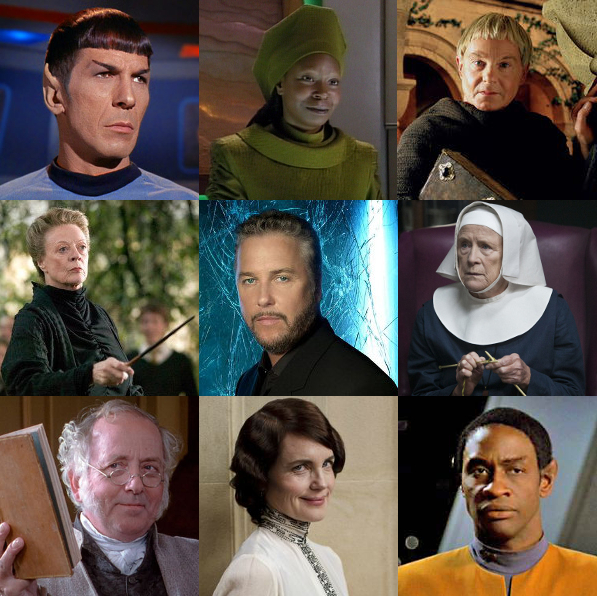
Spock (Star Trek), Guinan (Star Trek: The Next Generation), Brother Cadfael (Cadfael novels and tv series), Minerva MacGonagall (Harry Potter novels and films), Gil Grissom (CSI), Sister Monica Joan (Call the Midwife), Mr. Bennet (Pride and Prejudice), Cora Crawley (Downton Abbey), Tuvok (Star Trek: Voyager)
They’re not all the same gender, race, age, or even species as I am. Two of them are members of a religious order, and I’m not religious at all. Most of them don’t even (fictionally) live in this century.
What can we learn from this collection? (Other than that I have a thing for Vulcans and a rather inflated sense of my ability to dole out wise advice to young ‘uns.) That representation is an aspect of privilege even when you’re not being represented. Having white guys all over the place frees me to look at the characters in my media and identify with them not based on the outward categories they fall into but because they’re thoughtful, introverted, curious, even-tempered, and passionate about knowledge.
On the other hand, I am a member of a very small minority who is rarely represented in media, and then usually in a dismissive, stereotyped, even offensive way: history professors. According to most books, movies, and tv shows, we are boring, joyless pedants in tweed jackets with elbow patches who obsess over minutiae and care only about names and dates.
“Easily the most boring class was History of Magic, which was the only one taught by a ghost. Professor Binns had been very old indeed when he fell asleep in front of the staff room fire and got up the next morning to teach, and left his body behind him. Binns droned on and on while they scribbled down names and dates, and got Emeric the Evil and Uric the Oddball mixed up.”
– J. K. Rowling, Harry Potter and the Philosopher’s / Sorcerer’s Stone Ch. 8
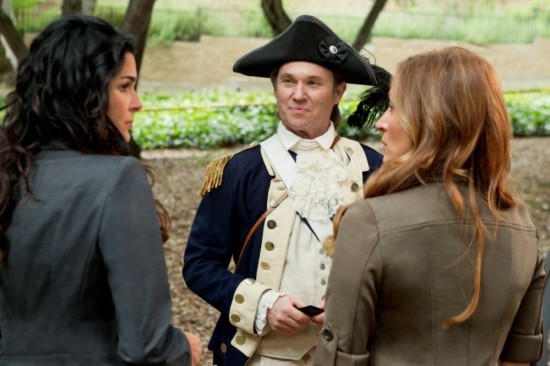
We always wear period clothes and are at best dimly aware of what century we actually live in, if not actively in denial about it.
Professor Dwayne Cravitz from Rizzoli and Isles s. 2 ep. 6 “Rebel Without a Pause”
(Not to mention that we make our (black) graduate students do unpaid labor so that they can have the “authentic slave experience.”)
Oh, and if we’re medieval historians, we’re indistinguishable from renfaire performers. (I can’t find a link to it now, but the memory is seared in my mind of an NPR interview with a scholar attending the annual medieval studies conference in Kalamazoo which made it clear the interviewer thought it was basically a fantasy convention.)
Come on by my history class sometime. I won’t be wearing a costume or droning on about names and dates. I’ll be deep in conversation with my students about social structures, economic forces, multicultrual interactions, source analysis, and all the other interesting parts of history.
Now, history professors are not, by any stretch of the imagination, a historically oppressed or marginalized group. I know how aggravating it can be to be badly represented even as a comfortably privileged middle class white man, but I can’t really imagine what it must be like to be, say, a Native American woman, or a gay man who uses a wheelchair, or a Muslim teenager with Asperger’s, and have to deal with not only the weight of the social disadvantages that come with that and seeing people like myself so rarely and poorly portrayed in media.
Of course we can all identify with people who aren’t like us. That’s not the point. The point is that, no matter who we are, we all deserve to see enough people outwardly like ourselves in books, television, movies, and other media that we don’t have to identify with them just to feel like we’re there.
History for Writers is a weekly feature which looks at how history can be a fiction writer’s most useful tool. From worldbuilding to dialogue, history helps you write. Check out the introduction to History for Writers here.
While there were solid choices on the list, what struck me was that out of 15 named creators only 2 were women. That’s 13%. Since women make up half of the world’s population, an eighth is an unacceptably low proportion in my eyes, so I made a list of my own.
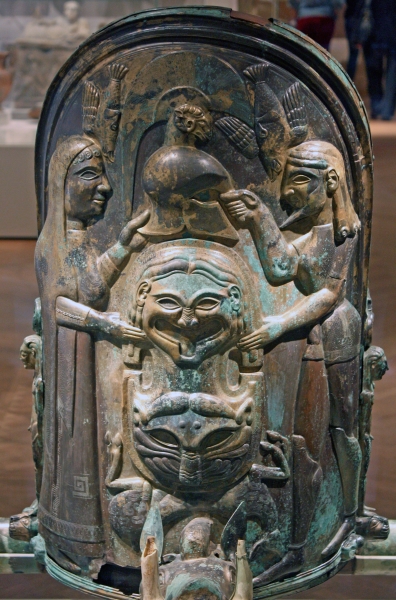
Even Achilles knows that women are an integral part of the world.
Notes on my list: 1) it’s novels only (no anthologies), 2) in a random order, 3) with no double entries (otherwise I’d include also Jemisin’s The Inheritance Trilogy), 4) and I include not only a variety of flavors within the fantasy genre but also historical fiction. Moreover, 5) I’ve included old and newer favorites as well as new-to-me authors whose works sound intriguing. Finally, 6) the common denominator is (like in the Game of Thrones) the presence of power struggles of various sorts, negotiation of identities, and survival.
1. Ursula K. Le Guin. The Earthsea cycle (A Wizard of Earthsea; The Tombs of Atuan; The Farthest Shore; Tehanu; Tales from Earthsea; The Other Wind)
Aspects of identity examined in an island-based early medievalesque world with magic and lots of sailing.
2. Kai Ashante Wilson. Sorcerer of the Wildeeps
Sword and sorcery, gods and mortals, with a band of mercenaries working as caravan guard in focus. (Linguist’s note: Fascinating mix of vernacular and more formal language.)
3. N.K. Jemisin: The Dreamblood duology (The Killing Moon; The Shadowed Sun)
Ancient-Egyptian-flavored fantasy on a moon orbiting a Jupiter-like gas giant.
4. Samuel R. Delany. Nevèrÿon series (Tales of Nevèrÿon; Neveryóna; Flight from Nevèrÿon;The Return to Nevèrÿon)
Sword and sorcery in a world before the dawn of history, with strong elements of power, economic development and breaking barriers.
A blend of a coming-of-age story with high-stakes intrigue and danger on an island with water-based tech.
Enjoy! I know I will get back to this list after finishing my current reading project.
Image: Monteleone chariot with Thetis and Achilles, detail of image by Peter Roan on Flickr CC BY-NC 2.0 (Etruscan, currently Greek and Roman galleries, The Metropolitan Museum of Art; 2nd quarter of the 6th century BCE; bronze inlaid with ivory)


 Co-Geeking


.jpg)


You must be logged in to post a comment.