Here are some ladies enjoying a good stag hunt, from an illumination in a copy of “The Letter of Othea to Hector” by Christine de Pizan. The image represents the mythical huntresses of the goddess Diana, as imagined by a medieval artist. We see one lady driving game by beating the bushes and another taking aim with her bow while two more blow the hunting horn and manage the dogs.
Hunting scene from the “Letter of Othea to Hector” via Wikimedia (Bibliothèque nationale de France, Paris; 1407-1409; paint on parchment; by the Master of the Letter of Othea)
Out There is an occasional feature highlighting intriguing art, spaces, places, phenomena, flora, and fauna.
Art can be a priceless source of evidence for early history, especially for areas and periods with limited surviving written sources, but, just like texts, artistic sources can be tricky to interpret.
Chigi Vase, reconstructed frieze via Wikimedia (7th c. BCE; painted pottery)
Take, for example, this scene from an archaic Greek vase (commonly known as the Chigi Vase, named for one of its modern owners). It provides us with some of our earliest evidence for Greek hoplites and the phalanx formation. Although we understand a lot about the essentials of how hoplite warfare worked, many questions remain unanswered about the precise details of both how a hoplite battle was fought and how the hoplite style of warfare developed over time. Arguments about these topics often depend in part on interpretations of the Chigi vase.
The vase depicts warriors arming themselves and marching into battle as hoplites. Many of the characteristic features of hoplite armament and warfare are on display: heavily armored fighters with large round shields and spears confronting one another in a head-on clash. We can date the creation of this vase to the seventh century BCE, around the same time that the hoplite style of warfare first appeared, so this artwork offers us crucial evidence about what the earliest phase of hoplite warfare looked like and how early some of its defining features emerged.
We can be fairly confident that the artist who painted the decorations on this vase was familiar with the realities of hoplite warfare. The ranks of the phalanx were filled by small farmers and prosperous crafters, including potters and artists. If the painter of this vase was not well-off enough to have fought as a hoplite themselves, they would certainly have known people who had. At the same time, the images are also artistically stylized in ways that make it hard to be sure how much we can rely on them as evidence.
For example, all the warriors shown on this vase are similarly equipped: they have the helmets, breastplates, greaves, and round shields that we think of as the standard parts of the hoplite panoply. Is this vase evidence that hoplite equipment was standardized from an early period, or did the artist depict a standard set of armor to create a pleasing image at a time when real hoplite gear was more of a hodge-podge with individuals equipping themselves as best they could? This question goes to more than matters of artistic taste: one of the most vexed questions in the history of the hoplite phalanx is whether it developed gradually out of older, less rigorously organized styles of warfare or it was created as a fully-realized concept in some particular place and time. Because hoplite warfare was connected with the rise and subsequent fall of early Greek tyrants, understanding the origins of the hoplite phalanx better would have implications for our understanding of major developments in political and social history. Knowing what the Chigi vase painter had in mind would tell us some important things about the early history of ancient Greece.
Out There is an occasional feature highlighting intriguing art, spaces, places, phenomena, flora, and fauna.
Advestudios, which produced these images, also creates videos and 360 vistas. Their work is wonderful for helping to picture these sites as living, functioning cities and settlements.
Hey, look! We found a thing on the internet! We thought it was cool, and wanted to share it with you.
Here’s a beautiful ancient Minoan fresco of a woman gathering saffron on a rocky hillside.
Saffron is a spice derived from the crocus flower, and since each flower produces only a tiny amount of the spice, gathering it on any scale is a labor-intensive process. With her large earrings and the many colorful, decorated layers of her clothing, this lady seems a little overdressed for such hard work. There may be various explanations. Perhaps this fresco represents a ceremonial harvest, not unlike the use of a golden shovel to dig the first scoop of dirt on a building project, or possibly a small harvest for religious use. It might also be simply an artistic depiction suitable for an elite home and not intended to represent the actual attire of an agrarian worker.
Whatever the case, it’s a beautiful work of art.
Image: Detail of saffron-gathering fresco, photograph by Yann Forget via Wikimedia (Akrotiri; c. 1700 BCE; fresco)
Out There is an occasional feature highlighting intriguing art, spaces, places, phenomena, flora, and fauna.
Very few works of art survived from ancient times with color intact, which can make it hard to imagine just how richly colorful the world may have been in the past. So we’re fortunate to have this frieze of Persian soldiers in glazed brick survive with so much visible color, especially the richly patterned details of their robes. These soldiers, depicted on the Persian kings’ palace at Susa, probably represent the professional core of the Persian army, popularly known as the Immortals.
The brightly patterned robes these soldiers wear may be a ceremonial dress more suited to putting on a display at court than to campaigning on the wild frontiers of the empire, but it is interesting to note that the Greek historian Herodotus makes special mention of the clothing of Persian soldiers when praising the bravery of the Athenian and Plataean soldiers who faced them at Marathon:
These were the first Greeks we know of to charge into battle, and also the first to look on men in Persian clothing unshaken, for up to this time even hearing the name of the Persians had struck the Greeks with terror.
Erik Kwakkel, Professor of Book History & Director, School of Information, UBC, Vancouver, Canada, shares all sorts of interesting tidbits online. Among the older ones—posted over seven years ago now and dating from the Middle Ages—are some wonderful children’s drawings made on birch bark.
This piece of bark is from among a large find made near the city of Novgorod, Russia, from the 13th century.
Isn’t it interesting? Look at the eyebrows and the noses! And the torsos! Incredibly cephalopodic, in a charming way. And the hands look like rakes. The figures are clearly identifiable as humans, but the customary ways of drawing some of the details seems to have changed over the centuries quite a bit.
Artist Even Amundsen has been doodling character portraits for teachers at a hypothetical Harry Potter -style Scandinavian myth and magic school. He calls the school Vølurheim.
The names of the Professors include very Scandi monikers such as Hulda Kvænangsdottir, Dagfinn Snauholt, and Kari Sigfridsdotter. Amundsen has even come up with a background for everyone.
The portraits are fabulous in every sense – and as a bonus, the outfits are very reminiscent of historical Scandinavian garb and folk costumes. Below are some of my favorite characters.
Amundsen said he’s “heavily inspired” by Snufkin (Snusmumriken in Swedish or Nuuskamuikkunen in Finnish) from the Moomin stories. You can definitely see the resemblance!
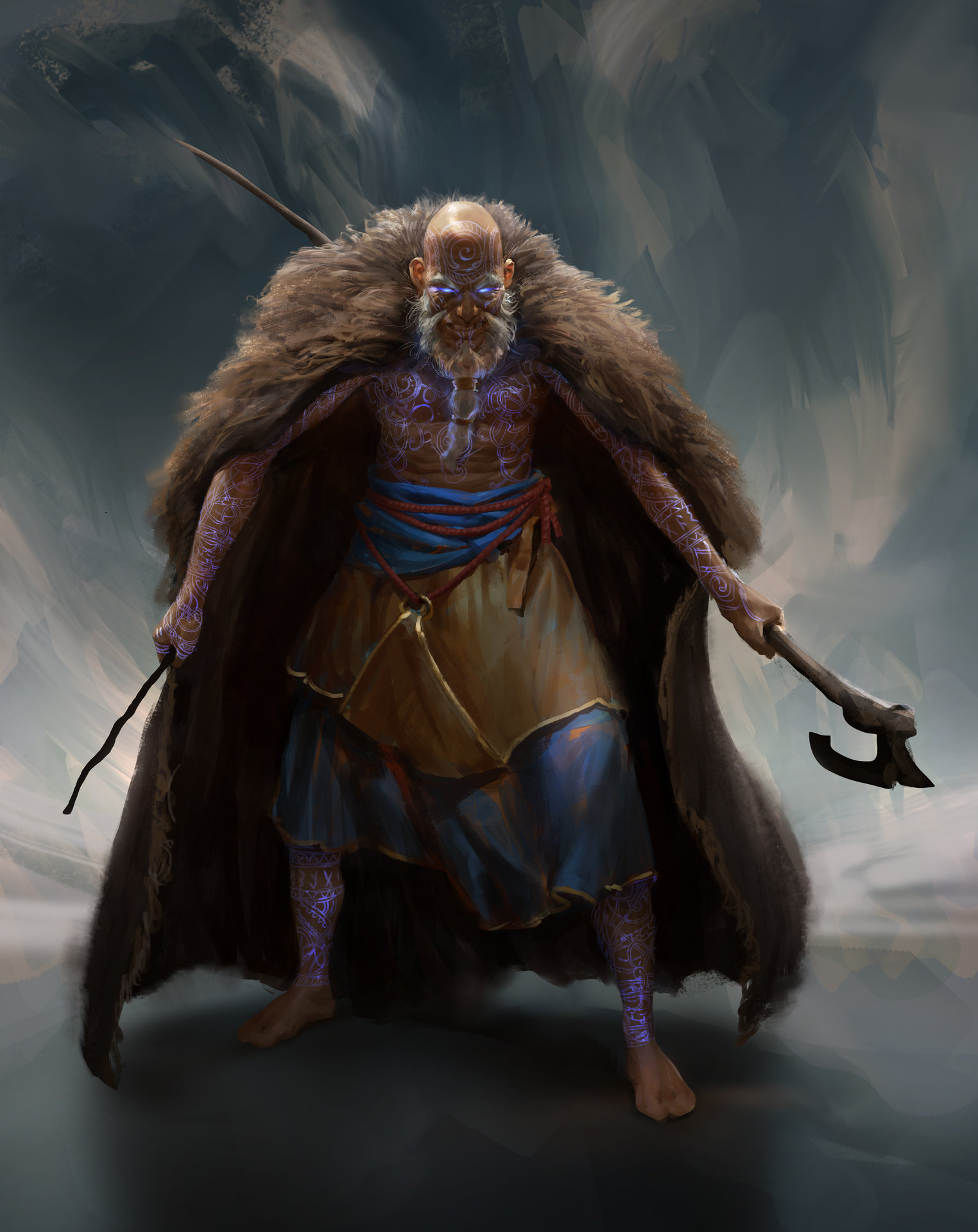
Professor of Defense Against the Dark Arts and veteran warlock of the Troll Wars is called Grimstav Draugsleiven. His portrait really shows his survival capabilities:
Magnificent, isn’t it? (Elemental shaman in WoW, anyone?)
Even Mehl Amundsen is a freelance concept artist from Norway who has worked for studios like Ubisoft, Blizzard, Riot, Axis Animation, and Wizards of the Coasts, among others. You can see more of his work at ArtStation.
In Making Stuff occasional feature, we share fun arts and crafts done by us and our fellow geeks and nerds.
Note: the creator’s content warning’s are: blood, guns, scopophobia, slight body horror, and injuries. There are also slight spoilers for Network Effect.
I’m Not Your Hero – The Murderbot Diaries Animatic by mar on YouTube
The animatic is set to Sara Quin and Tegan Quin’s “I’m Not Your Hero”. The song wasn’t familiar to me, but I have to admit it fits pretty well.
And, seriously, someone please buy the rights and develop a fantastic longform Murderbot screen adaptation. Like, now! *standing with money in my outstretched hand*
This decorated hat was created by an indigenous North American Huron/Wyandot artisan around 1840. It is made of wool, silk, and moosehair, worked using traditional techniques, but patterned after the Glengarry-style cap of the Scottish highlands and decorated with a Victorian floral motif.
Hats and other decorated objects like this one represent a complex interplay of cultural, artistic, and economic influences. Indigenous artisans from Iroquoian, Wabenaki, and other native nations had long created trade goods intended for exchange with European settlers and adapted to European tastes. In the nineteenth century, indigenous creators took advantage of the growth of a tourist industry around the Great Lakes region to market a broader range of wares combining forms that white customers would recognize and find useful, like this Glengarry cap, with decorative schemes that appealed to Victorian sensibilities while preserving traditional techniques. Such objects were created in a combination of traditional and modern materials, such as moosehair and leather combined with wool, silk, and glass beads.
The creation and sale of these goods—often produced by female artisans—provided both a means of preserving traditional artistic methods and a valuable economic resource to indigenous and First Nations peoples at a time when other opportunities in white-dominated American and Canadian society were hard to find, and indigenous cultures were often suppressed, sometimes violently.
Image: Glengarry-style cap via Metropolitan Museum (Metropolitan Museum, New York; c. 1840; wool, silk, and moosehair; unknown Huron/Wyandot artist)
Out There is an occasional feature highlighting intriguing art, spaces, places, phenomena, flora, and fauna.




 Co-Geeking


You must be logged in to post a comment.