The beginning of autumn is upon us. Trees are putting on their fall colors as the days grow shorter and the night chill begins to bite. What’s a druid to do but put together an autumn-themed transmog? This includes a few of the beautiful woodsy leafy pieces from the Emerald Dream zone mixed with some other gear.
There’s an old law of probability often phrased that if an infinite number of monkeys sat at an infinite number of typewriters pressing random keys for an infinite amount of time, they would at some point type out Shakespeare’s Hamlet. The point is that, given a large enough scope of opportunity, things that are very unlikely but not impossible can and do happen.
One of the earliest known expressions of this idea comes from the Roman statesman and philosopher Cicero, although Cicero takes the negative view. He poses the idea as a thought experiment to reject materialist philosophies, like Epicureanism, which held that the world was not created by the gods but was the product of random collisions of matter:
How can anyone look on these things yet convince themselves that certain solid and discrete bodies are carried by force and gravity, and the beautiful and exquisite world is made by the fortuitous arrangement of these bodies? If someone thinks this is possible, I don’t see why they shouldn’t also think that innumerable shapes of the twenty-one letters, made out of gold or whatever material, could be tossed down on the ground so that one could read the words of Ennius’ Annals in them. For myself, I doubt that chance could make a single verse out of them.
Cicero, On the Nature of the Gods 2.93
(My translation)
As unlikely as it is that just tossing letters down on the ground once will yield any comprehensible lines from Ennius’ early Roman historical epic, the infinite monkey theory tells us that if we threw an infinite number of letters an infinite number of times, some verses of Ennius would eventually emerge, not to mention lines from Cicero himself, or any other text that could be written in the Latin alphabet.
One might say that Cicero’s mistake was an insufficiency of monkeys.
Serving exactly what it sounds like, the Quotes feature excerpts other people’s thoughts.
So much of what survives of ancient art has lost the colors it originally held—statues have lost their paint, pigments have faded, textiles have weathered. One of the few materials that holds its color well over time is glass. Just look at this ancient Greek glass perfume bottle and see!
This type of bottle, called an alabastron, was used to store small quantities of valuable liquids like perfumed oil. Like this one, they typically had pointed or rounded bottoms and were kept in wooden or metal stands or hung from loops. The bright colors of this bottle are made from layers of colored glass and gold, bent around one another and blown into shape.
The swirling colors of this bottle almost make me think of 1960s psychedelia. It can be startling to find an ancient object that has kept its color and be reminded that it was created and used in a world that was equally colorful.
Image: Alabastron via Metropolitan Museum of Art (found Greece, currently Metropolitan Museum, New York; 1st c. BCE; glass)
Out There highlights intriguing art, places, phenomena, flora, and fauna.
Cults are a staple of modern fantasy. When you need a shadowy organization for your hero to go up against, whether they’re protecting an ancient secret or scheming to bring about the end of days, you can’t go wrong with a cult.
There are plenty of modern examples of secretive organizations that draw in forlorn or gullible people and condition them to submit to the will of charismatic leaders. Such organizations can serve as models for imagining fictional cults, but if you want to write a cult in a fantasy setting, it can be helpful to look at ancient examples. One of the oldest documented examples of a secretive religious organization in conflict with larger society is the ancient Roman cult of Bacchus.
The cult of Bacchus emerged in southern and central Italy in the late third century BCE. It was centered on the worship of the god Bacchus, a version of the Greek Dionysus associated with wine, fertility, and ecstatic release. The Italian Bacchus also borrowed some traits from the Roman god Liber, connected with grapevines, wine, fertility, and freedom. The worship of Dionysus, Bacchus, and Liber was well established as part of the state religion of the Roman republic, which by this time had solidified its control over the whole of the Italian peninsula. The cult of Bacchus was a new religious movement that drew on older traditions but offered its followers new ways of celebrating them.
Followers of this movement practiced their worship in secret, not as part of the state-sanctioned public religion. Only initiated members of the cult were allowed to join in. Unlike traditional Roman religious celebrations, which maintained distinctions between social classes and had separate roles for men and women, initiates of Bacchus included people of all genders and classes who mixed together indiscriminately in their rites. Celebrations were raucous nighttime affairs that featured feasting, drinking, music, and dance.
The Roman elite was scandalized by the popularity of this religious movement. All the surviving sources describing its activity come from this hostile perspective and include lurid suggestions that the Bacchic revelers were practicing magic, engaging in wild sexual frenzies, and scheming at poisonings and other nefarious deeds. Despite these unfavorable sources, there is no reason to think that the cult of Bacchus was actually so outrageous. Seen in the context of the time, we may actually find the cult appearing in a much more favorable light.
To understand the cult of Bacchus, we need to set aside both the hostile attitude of the Roman elite and many of our modern associations with the term cult. While we associate the term today with secretive, manipulative organizations, cult, in its historic use, refers simply to the set of practices that are appropriate to the worship of a particular god or divine entity. All ancient gods received cult from their worshipers, from the official ceremonies for gods of the state to the everyday rituals that attended family and household spirits. Although the cult of Bacchus carried out its rituals in private, there is no indication that the organization was manipulative or coercive, or that members were isolated from the rest of society. In fact, in many ways, the cult offered a positive experience for its members.
Italy in the late third century BCE was recovering from the devastation of the second Punic War. From 218 to 204 BCE, the Carthaginian army led by Hannibal operated largely unchecked in Italy. The effects of war were far-reaching. Many young people from Rome’s Italian subjects were called up to fight in Rome’s legions, some never coming home again. Roman and Carthaginian armies alike ravaged farms up and down the peninsula. In the aftermath of the war, many small farms faced ruin, and a lot of Italian families had little choice but to sell their land to the aristocratic elite at whatever price they could get and move into cities like Rome looking for any work they could find to scrape together a living. Italy in the late third and early second centuries BCE had a vast population of poor people barely getting by, dislocated by war and poverty from their ancestral homes, and resentful of the elite who had come out of the war riding high on plunder and foreign slaves.
The cult of Bacchus offered relief from the pressures of life—if not a hope for a better world, at least a temporary distraction from the troubles of this one. It helped people who had been displaced from deeply rooted ties of family and community find new connections outside the limitations of gender and class. For people who had little joy in their lives and faced a hard daily grind just to eat, the appeal of a celebration full of food, music, and dance was strong. It’s not hard to understand why the cult gained a following in post-war Italy.
It’s also not that hard to see why the Roman aristocracy reacted with such alarm and hostility. The Second Punic War had hit Rome hard. Even though the Romans emerged victorious over Carthage in the end, a generation of potential recruits for Rome’s armies was killed or wounded in the fighting. Rome’s resources were stretched to the limit. What’s more, the war exposed weaknesses in Rome’s hold on Italy. Hannibal’s strategy was to deny Rome resources and fighting power by helping its subjects in Italy rebel. Not all of Italy took Hannibal up on his offer, but enough cities did, especially the Greek cities of southern Italy, to make the Roman elite nervous about their ability to maintain control of the peninsula. Since the cult of Bacchus particularly appealed to the southern Italian Greeks, it doesn’t take much to see why the Roman aristocracy in the years after the war saw disaffected poor Italians gathering together in secret and challenging established social lines as a dangerous thing that needed to be stamped out. The Roman state aggressively suppressed the cult of Bacchus, the first documented example in Western history of a religious movement persecuted by the state.
The cult of Bacchus may not fit the mold of the classic sinister fantasy cult, but understanding the context in which it arose and the forces which drew people to it can help with the worldbuilding for a story in which a cult may not be so benign. Desperate times drive people to find community, relief, and happiness in whatever ways they can. The cult of Bacchus was in reality a benevolent organization that provided much-needed fellowship, but unscrupulous people and organizations can take advantage of the same needs for darker ends.
Image: A scene of Bacchic revelry from a Roman sarcophagus, photograph by Wolfgang Sauber via Wikimedia (currently Anatalya Archaeological Museum; 2nd c. CE; marble)
History for Writers looks at how history can be a fiction writer’s most useful tool, from worldbuilding to dialogue.
Murderbot, the sardonic human-machine construct Security Unit who was designed to fight and kill but would rather just watch media, reflects on what makes a good story:
The latest show I was watching had started out good but turned annoying. It was about a pre-terraform survey (on a planet with completely the wrong profile for terraforming anyway, but I didn’t care about that part) that turned into a battle for survival against hostile fauna and mutant raiders. But the humans were too helpless to make it interesting and they were all getting killed. I could tell it was heading toward a depressing ending, and I just wasn’t in the mood. […] I didn’t want to see helpless humans. I’d rather see smart ones rescuing each other.
Murderbot, in Rogue Protocol
Me too, Murderbot. Me too.
Wells, Martha. Rogue Protocol. New York: Tom Doherty Associates, 2018, pp. 22-23.
Serving exactly what it sounds like, the Quotes feature excerpts other people’s thoughts.
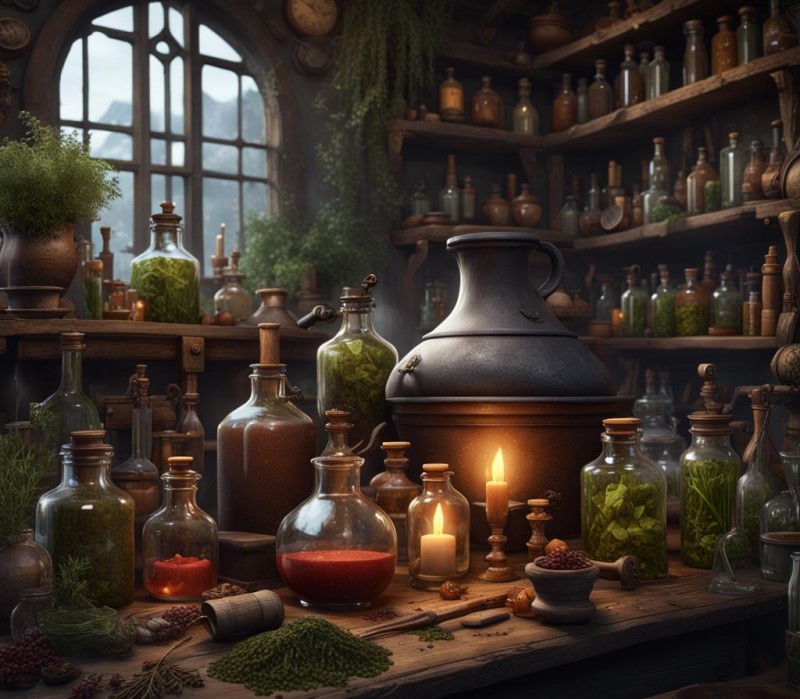
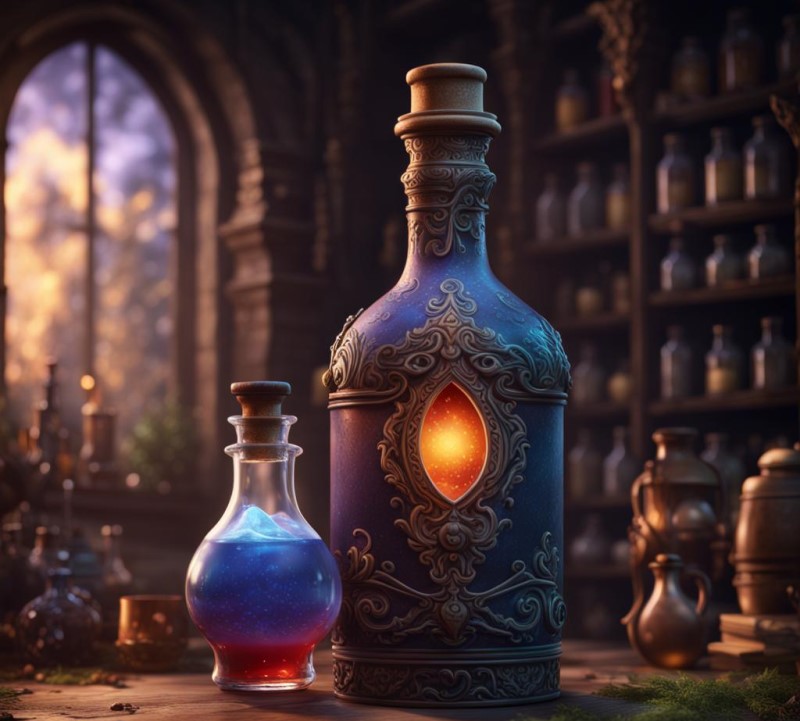
In one of the Dungeons & Dragons games I DM for, there is a player who is very into the idea of gathering herbs and brewing magic potions. The base game as written doesn’t have much in the way of rules for alchemy, so we’ve just been winging it for the better part of a year. That worked, but it wasn’t as satisfying as either of us would like, so I finally sat down and brewed up a set of rules for herb-gathering and alchemy. Here’s what we’re playing with now. Feel free to use this or adapt it, if it seems like it might be a fun addition to your own games.
Alchemy
An alchemical system for Dungeons & Dragons, 5th edition.
Harvesting herbs
To collect herbs, you must be in an environment where wild plants grow. The DM will determine whether there is anything available for you to gather. Specific environments may give you advantage or disadvantage to your roll, at the DM’s discretion. Gathering herbs takes an hour.
Roll a Nature check to see whether you successfully collect herbs and how much. If you have an Herbalism kit and the proficiency to use it, you may add your proficiency bonus to the roll
Once you have harvested an area, whether you successfully gathered herbs there or not, the plants need a month to regrow before you can harvest the same area again (unless they are affected by magic that causes plant growth).
Nature check
Herbs collected
Less than 11
None
11 – 15
1 batch
16 – 20
2 batches
21 – 25
3 batches
26 or more
4 batches
For each batch of herbs you collect, roll 1d6 to determine what type of herbs you find. (You can also choose to target a specific kind of herbs when you harvest. If you do, you make your harvesting roll at disadvantage, but all herbs you collect are of the kind you want.) Keep track of how many batches of herbs you have of each type.
1d6 roll
Herb type
1
bark
2
berries
3
fungi
4
leaves
5
roots
6
seeds
Making potions
To make potions, you must have enough herbs of the right types (1 batch of each type listed on the table below, unless the chart calls for more). Some potions require special ingredients, to be determined by the DM. Each brewing attempt consumes the given amount of herbs and takes one hour.
Roll an Arcana check to attempt to make each potion. If you have proficiency with Alchemist’s supplies, you may add your proficiency bonus to the roll. If you do not have alchemical equipment, you have disadvantage on the check. Whether the check succeeds or fails, the herbs are consumed. The DC for the check depends on the rarity of the potion you are trying to make:
Potion rarity
Arcana DC
Common
10
Uncommon
15
Rare
20
Very rare
25
Legendary
30
If you succeed on your Arcana check by 4 or less, you make 1 potion of the chosen type.
If you succeed on your Arcana check by 5 to 9, you make 1d4 potions of the chosen type.
If you succeed on your Arcana check by 10 or more, you make 1d6 potions of the chosen type.
(A DM might also allow a Medicine check in place of an Arcana check, or let proficiency with a Poisoner’s kit apply to the roll, depending on what kind of potions the character is brewing.)
Potion
Rarity
Herbs required
Antitoxin
Common
Bark, berries, seeds
Oil of Etherealness
Rare
Bark, leaves x3, roots
Oil of Sharpness
Very rare
Fungi x4, leaves x2, roots x2
Oil of Slipperiness
Uncommon
Bark, leaves, roots, seeds
Philter of Love
Uncommon
Berries, fungi, leaves, roots
Potion of Animal Friendship
Uncommon
Berries, leaves, roots, seeds
Potion of Clairvoyance
Rare
Fungi, leaves x2, roots x2
Potion of Climbing
Common
Bark, leaves, roots
Potion of Diminution
Rare
Fungi, leaves x3, roots
Potion of Flying
Very rare
Bark x2, leaves x4, roots x2
Potion of Gaseous Form
Rare
Bark, leaves 2x, roots, seeds
Potion of Giant Strength (Hill)
Uncommon
Bark, leaves 2x, roots
Potion of Giant Strength (Stone/Frost)
Rare
Bark 2x, leaves 2x, roots
Potion of Giant Strength (Fire)
Rare
Bark 2x, leaves 2x, roots
Potion of Giant Strength (Cloud)
Very rare
Bark 3x, leaves 3x, roots
Potion of Giant Strength (Storm)
Legendary
Bark 4x, leaves 4x, roots, special
Potion of Growth
Uncommon
Bark, leaves 2x, seeds
Potion of Healing
Common
Berries, leaves, seeds
Potion of Greater Healing
Uncommon
Berries 2x, leaves, seeds
Potion of Superior Healing
Rare
Berries 2x, leaves, seeds 2x
Potion of Supreme Healing
Very rare
Berries 3x, leaves 2x, seeds 2x
Potion of Heroism
Rare
Bark, berries, leaves, roots, seeds
Potion of Invisibility
Very rare
Leaves 3x, roots 2x, seeds
Potion of Invulnerability
Rare
Bark 2x, leaves, roots, seeds
Potion of Mind Reading
Rare
Fungi, leaves, roots 2x, seeds
Potion of Poison
Uncommon
Fungi 2x, roots, seeds
Potion of Resistance
Uncommon
Bark, berries, roots, seeds
Potion of Speed
Very rare
Fungi 2x, leaves 2x, roots 2x
Potion of Water Breathing
Uncommon
Bark, berries, leaves, roots
Restorative Ointment
Uncommon
Bark, berries, seeds 2x
Sovereign Glue
Legendary
Bark 2x, fungi, leaves 2x, roots 4x, special
Universal Solvent
Legendary
Berries, fungi 3x, leaves, seeds 2x, roots 2x, special
The table above includes only items listed in the Systems Reference Document released by Wizards of the Coast under Creative Commons. If you want to expand this table to include other potions and items, you can apply the following principles:
Determine how many ingredients the potion requires. The number of ingredients depends on the rarity of the potion.
Rarity
Ingredients
Common
3
Uncommon
4
Rare
5
Very rare
6 – 7
Legendary
9 plus a special ingredient
Determine which ingredients are needed. The table below gives some general suggestions, but feel free to choose whichever ones feel right for the potion in question.
We just discovered that our recipes for the Riders of Rohan were referenced in a piece of Middle Earth fanfiction over on Archive of Our Own. The story is called “she had a spirit and courage at least the match of yours” by shOokspeared, and it’s a lovely little slice-of-life tale following Éowyn on a visit to the Shire in the days of peace after the War of the Ring. In a letter home to her husband Faramir, Éowyn mentions enjoying the familiar tastes of braised beef and saffron and cream pancakes for lunch with her Hobbit friends one day.
We’re astonished and delighted to see that our work is still interesting and useful to others!
Complaining about “kids these days” with strangely-spelled names is a well that never runs dry. It’s also an older habit than many who indulge in it would think. Here’s a bit from a 1930 P. G. Wodehouse story where Bertie Wooster’s Aunt Dahlia chides him for falling in love with a young lady with an eccentrically-spelled name.
‘Yes, Aunt Dahlia,’ I said, ‘you have guessed my secret. I do indeed love.’
‘Who is she?’
‘A Miss Pendlebury. Christian name, Gwladys. She spells it with a “w”.’
‘With a “g”, you mean.’
‘With a “w” and a “g”.’
‘Not Gwladys?’
‘That’s it.’
The relative uttered a yowl.
‘You sit there and tell me you haven’t enough sense to steer clear of a girl who calls herself Gwladys? Listen Bertie,’ said Aunt Dahlia earnestly, ‘I’m an older woman than you are – well, you know what I mean – and I can tell you a thing or two. And one of them is that no good can come of association with anything labelled Gwladys or Ysobel or Ethyl or Mabelle or Kathryn. But particularly Gwladys.’
P. G. Wodehouse, “The Spot of Art”
The next time someone gets in a snit about Kaytlynn, Jaxson, or Alexzandre, you can let them know they’re part of a tradition at least a century old.
Wodehouse, P. G. “The Spot of Art.” Very Good, Jeeves. First published 1930. Reprinted in The Jeeves Omnibus. Vol. 3. London: Hutchinson, 1991, p. 460.
Serving exactly what it sounds like, the Quotes feature excerpts other people’s thoughts.
Midsummer will be upon us at the end of this week (or midwinter, depending on your hemisphere). In Finland, this is one of the most important holidays of the year, and we’ll be taking time out to relax and enjoy the long, light days. Whatever your midsummer plans may be, we wish you all a very happy one, whether you’re out reconnecting with nature, staying home to read a good book, or just going about your business as usual.
Summer is here, and while for some folks that means hitting the beach and riding some waves, my Blood Elf mage is getting nautical in a more piratical way. Here’s her transmog for the season, and the pieces that went into it.




 Co-Geeking

You must be logged in to post a comment.