2022 was… well, it was certainly a year. It didn’t have the apocalyptic awfulness of 2020 or the confused energy of 2021. 2022 had some good parts and some terrible parts, but for a lot of us the year just kind of happened.
It was a calmer year for the two of us, being finally settled in our new home. We haven’t done a top five post in the last few years, but now that 2022 is coming to a close, we thought we’d have a look at what you guys have been looking at here.
Here are our posts from 2022 that got the most views this year:
World of Warcraft Dragonflight Talent Calculator. Eppu posted a link to Wowhead’s talent calculator in the run-up to Dragonflight along with some of her own thoughts, and it looks like a lot of you found that helpful.
The most viewed posts overall this year also include some older posts. Here’s the all-time Co-Geeking posts that got the most views this past year:
Testing Witches with Water. A lot of you are still really interested in how (or how not to) determine if someone is a witch; this post from 2019 still gets a lot of views.
Race in Antiquity: Skin Color. A post from 2018 about an important topic: looking for evidence of racial diversity in the ancient Mediterranean.
Our Western calendars will soon be moving on from 2022 to 2023. Since most of us are used to living with calendars that count forward inexorably year after year, it may be hard to grasp that the idea was, at one time, revolutionary and even provocative.
In the ancient world, most peoples’ ways of tracking time were cyclical rather than linear. Observing the natural cycles of day and night, the moon’s phases, and the turning of the seasons led people to construct methods of tracking time that always returned to the same starting point. In small-scale agrarian societies, there was rarely a need to keep track of time periods longer than a year or to know exactly how long ago events out of living memory had happened. Larger, more organized societies began to think on longer time scales, but still within a cyclical framework. Monarchic states like Egypt, Babylon, and Persia dated events by regnal years: the year in which a new king acceded to the throne was year 1, the next year was year 2, and so on, until the king died and the cycle started over again with year 1 of the next king.
Sometimes the idea of the cycle was even more important than the reality: some Egyptian inscriptions record thirty-year celebrations for kings whose reigns lasted only ten or twenty years. A king was expected to celebrate his thirtieth year, so it was recorded in inscriptions whether it had happened or not. The cycles of regnal years were thus treated as if they were as natural and dependable as the rise of the sun and the waning of the moon. These calendars had no defined beginning or regular way of determining how far back events of the distant past were.
For those with an interest in the past, these cycles could be organized in order. Many states, from the Assyrian Empire to the Roman republic, kept annals, records of reigning figures and significant events on a year by year basis. The structure of the calendar in which these events were recorded, though, continued to prioritize the regular return of cycles rather than linear movement forward.
The first Western calendar to have a defined beginning and a linear count of years was initiated by the Seleucid dynasty after the collapse of Alexander the Great’s empire. One of Alexander’s generals, Seleucus, was appointed governor of Babylon under Alexander’s successor in 311 BCE. A few years later, Seleucus broke away and declared himself king of a new kingdom stretching from the Mediterranean Sea to the borders of India. Rather than use regnal years like earlier kings, Seleucus instituted a new calendar that was backdated to begin with his appointment as governor and continued numbering the years from then on, never resetting when a new king came to power.
The novelty of Seleucus’ calendar was a response to the unusual nature of the kingdom itself, a cobbled-together empire of diverse peoples, many of whom had traditions of civic life and imperial rule thousands of years older than the upstart Macedonian warlords now running the show. Seleucus’ calendar was meant to unify the many peoples of his realm but also to mark a definitive break with the past. The Seleucid dynasty was to be unique, its claims to power not dependent on anything that had come before. Its subjects should not be allowed to imagine that the Seleucid kings might have their time and then fall to be replaced by new cycles of native rulers. The Seleucid era was intended to be eternal, and the way it counted endlessly into the future, never cycling back, was a key part of the regime’s propaganda.
Like all imperial propaganda, however, the Seleucid calendar met resistance. Local people throughout the empire continued to use their own traditional ways of marking time alongside the official calendar. Other powers responded by creating their own linear calendars with different starting points. An inscription from Greece known as the Parian Chronicle takes the idea of a definitive turning point and inverts it, recording historical events in terms of how far in the past they happened before a defined date. This chronicle made an implicit challenge to the Seleucid kings in two ways. First, the date from which it counted back was the date of a major treaty between Greek cities and the Ptolemaic dynasty of Egypt, one of the Seleucids’ major rivals. More subtly, by looking backwards rather than forwards, it emphasized the antiquity and historical importance of the Greek cities in contrast to the parvenu status of the Seleucids.
Other peoples found other ways of challenging the Seleucids’ claims to authority. Among the Jewish people, who struggled for freedom from Seleucid rule, the new calendar inspired a rethinking that made the shift from cyclical time to linear time a rallying point against oppression. If time could have a definitive beginning, it could also have a definitive end. Apocalypticism, the belief that the end of the world was foreseeable, even imminent, became one of the unifying ideas of Jewish resistance to Seleucid rule. Apocalyptic narratives gave an urgency to resistance: if the world was coming to an end, then the time to act in the name of justice was now. They also inspired the hope that no matter how powerful the Seleucid king and his armies might seem, the divine plan for the world was greater.
This apocalyptic thread remained part of Jewish thought, if not always in the mainstream, even after the defeat of the Seleucid kings. It saw a revival when the Jews faced another imperial intrusion under Rome. Rome had its own linear calendar, counting years forward from the supposed founding date of the city in 753 BCE, and apocalyptic narratives were as useful in organizing anti-Roman resistance as they had been in the face of the Seleucids. The early Christian movement took shape in the turmoil of this time and took on the idea of a foreordained end to time as part of its own narrative.
Something as seemingly straightforward and utilitarian as a calendar can have complicated layers of meaning. Enjoy 2023!
Image: Ancient sundial, photograph by Ad Meskens via Wikimedia (Currently Side Archaeological Museum, Side, Turkey; Roman period; stone and metal)
History for Writers looks at how history can be a fiction writer’s most useful tool. From worldbuilding to dialogue, history helps you write.
A good-looking map for a tabletop role-playing session can not only help your players figure out where they are and where to go, it can also give atmosphere to the adventure. As someone with no artistic skills to speak of, I’ve never been able to make nice maps on my own, but fortunately there are services for that now.
One I’ve been playing around with lately is Inkarnate. Inkarnate can produce maps in several different styles, including large-scale geographic maps, regional brid’s-eye views, and maps for individual buildings and dungeons. You can define coastlines and paint in ground and water textures. Then you can add individual items like mountains and towns on larger maps, or walls, chairs, and treasure chests on smaller-scale ones, each of which can be individually scaled and rotated.
There’s a good free version you can try out if you want to see how it works. It has only a limited set of assets to use, but there’s plenty you can do with just these. I made these maps below for a game earlier this year just using the free assets.
Brass Bay
Windward Shore House, first floor
I like Inkarnate enough that I’m considering paying for a full membership. I really like what it is helping me produce. If you’re looking for an easy way to make your own game maps, you might want to check it out.
In these waning days of Shadowlands, with nothing much left to do except wait for Dragonflight to come out, I decided to dip my toe into World of Warcraft Classic. I started a Night Elf druid, since that’s what I play as a main in the current game. I didn’t get very far into the game before deciding that this is not for me.
I did enjoy the nostalgia. It brought back warm memories of days long past when I experienced Azeroth for the first time. But I also missed the many, many quality-of-life changes that have come to the game since then. Questgivers didn’t show on my minimap. I couldn’t mouse over a mob and tell if I needed to kill one of them or not. I couldn’t even track all my quests on the screen. The highlight of my evening was getting a six-slot bag drop off a random boar.
The nostalgia was also soured by facing the reality of 18-year-old graphics and zone design. My Night Elf was not a savage and wild descendant of an ancient race but a lumpy sack of potatoes with a mustache. Teldrassil felt like an abandoned strip mall, not a magical world tree.
I know that there are a lot of people who enjoy playing Classic, even those for whom it is the only version of the game they play, and I am deeply, genuinely happy for them. After dealing with years of stonewalling from Blizzard, I’m delighted that they got the game they wanted. It’s just not the game I want in 2022, and I know that now.
All of you Classic players, I salute you and I wish you the very best of adventures, but don’t expect to see me around any time soon.
In less than a week we will say farewell to Shadowlands and move on to the next World of Warcraft expansion: Dragonflight. In anticipation, the two of us reflect on what we hope the new expansion learns from the successes and missteps of the old.
Erik: The biggest thing I hope Dragonlifght builds on from Shadowlands is Torghast, specifically the great flexibility the Torghast dungeons had in how many characters they were for and how difficult they were. Torghast was great for us to play together just the two of us or to do solo when we felt like it. The biggest weakness of Torghast was that it had no rewards beyond materials for legendary crafting. My dream is an expansion where every dungeon adjusts to any size group, from one to five (or even more) and scales its difficulty appropriately. What about you?
Eppu: Agreed! (This is literally the first thing I wrote down, too, when drafting my thoughts for this post.) While it’s fantastic to play through a dungeon that’s adapted to your gear level, getting no proper loot sucks.
The other big thing I hope for is convenient and comfortable flight. You had a few more thoughts about that, didn’t you?
Erik: Yeah, I’m excited that we get flying early in Dragonflight. While I haven’t minded the way Blizzard has handled flying in the past few expansions—starting out on the ground and earning flight by playing through the game on one character—I like the idea of flight being unlocked right out of the gate.
At the same time, I’m a little worried that we’re going to see a classic Blizzard overcorrection and they’re going to turn flight from a convenient method of getting around into some overdesigned, unfun “gameplay” like what happened to mission tables in Shadowlands. Are there any features from Shadowlands you’re hoping won’t make a return next expansion?
Eppu: One, and they already took care of that in the new crafting interfaces. I seriously hated the info box for the marks that you can add onto other crafted items. It was so fecking clunky; I’m really glad it’s gone!
I’d also love to see professions improved. These days whenever you have the mats to make something, your character has already leveled past it. You could always craft items for auctioning, of course, but I find additional management like that annoying. It’s not what I come to WoW for. The crafting orders sound like those who want to dink around with auctioning now will have that opportunity. It will remain to be seen whether the rest of us will have anything useful to craft. How about you?
Erik: I’m interested to see what’s going to happen with crafting, too. I’m right with you on that infernal info box on the crafting interface!
As for things I hope don’t come back, the scarcity of anima was a theme in the lore of Shadowlands, but it also affected the gameplay of the expansion too much. I never explored even half of what the covenant sanctums had to offer just because I never had enough anima to do anything. World quests felt unrewarding for the level of time and effort they required. I hope we don’t have the same scarcity-based design in the next expansion.
But enough about the negative. What are you looking forward to the most in Dragonflight? Blizzard keeps blowing me away with the art design of their zones, and Shadowlands was the best yet. I can’t wait to see the art and design in an expansion focused on dragons and elemental powers.
Eppu: You’re right, the anima scarcity wasn’t satisfying at all—haven’t we done the grind for, what, 18 years now? It’s also true that the art has improved a lot since Draenor (if not Pandaria). But I’m not quite sure what you mean by best art design yet. Would you elaborate?
Erik: I think what I’m trying to get at is this: Each of the main zones of Shadowlands has a clear aesthetic that looks pretty simple at first: Bastion is peaceful fields and clear skies, Maldraxxus is carnage and gore; Ardenweald is a dreamy fairy forest; and Revendreth is crumbling gothic ruins. But the longer you spend in each zone, the more you discover. Bastion is less peaceful than it appears, but the dangers are hidden from sight like the forgotten memories of the Kyrian. The very land in Maldraxxus is made of skin and bone and hair, like the corpse of some gigantic creature. Ardenweald is full of swirls and circles, hinting at the cycle of death and rebirth that it serves. In Revendreth different stories about a corrupt elite and the gnawing discontent from below play out at the higher and lower levels of the of the zone. There is a tighter connection between story and design in Shadowlands than we have seen in most previous expansions. (I’d cite Drustvar from Battle for Azeroth as another excellent example.) I hope we see more of that in Dragonflight, zones that are not only beautiful to play through but where the art and the story inform one another so deeply.
Eppu: Yes! It would be great if the story and art supported each other. So far it’s impossible to say, but I’m cautiously optimistic. The expansions certainly have gotten better and better over the years. Incidentally, my all-time favorite is Battle for Azeroth. Do you have a favorite expansion?
Erik: Hard to say, but I think Legion. I enjoyed the class storylines, and we got a whole new kind of Tauren to play! But there are things I’ve loved in every expansion, and I look forward to finding out what those will be in Dragonflight.
Thoughts in no particular order but grouped thematically. Spoiler warnings in effect!
Characters
Erik’s thoughts:
Angela Basset as Queen Ramonda gives a devastatingly powerful performance. She conveys so much grief, love, and determination with very spare acting choices. She commands the scene every time she is on screen.
One of the things I have always appreciated about the world of Black Panther is how much room it makes for characters to listen, learn, and grow. We saw it with T’Challa and Nakia in the first movie; here Shuri and M’Baku show it best.
Another wonderful thing about Black Panther has been how much room the movies make for women to have stories that aren’t about relationships—romantic or familial—with men. T’Challa’s death naturally hangs heavily over Wakanda Forever, but the movie also balances that with incredibly important relationships among women.
Eppu’s thoughts:
Tenoch Huerta was great as an all-powerful, unhinged Namor. He rotated through cracked, creepy, companionable, and perhaps even a little lonely. (After all, we didn’t see him connect with anyone else other than Shuri.) The way he tried to physically intimidate Ramonda by leaning way, way, WAY too close during their beach conversation still gives me the chills.
LOVED the amount of women again: women with real agency, and lives and goals of their own. Like real people, imagine that! (Well, perhaps not Director de Fontaine—she smells like a future baddie, and a hammy one at that like Rumlow / Crossbones was—but to be fair we didn’t see much of her yet.)
I knew to expect tributes to Chadwick Boseman, but wouldn’t have guessed how much there was. And the opening credit where the letters spelling Marvel Studios were all filled with images of T’Challa—that was perfect. The usual Marvel theme would’ve sounded garish, too. RIP.
Story
Eppu’s thoughts:
I found that the pacing worked for me; I didn’t feel bored nor overwhelmed. It was really nice that the characters were given time to process, to just sit for a bit instead of rushing headlong at a breakneck speed. (I’ve long loathed the old rule of there-must-be-an-action-scene-every-7-minutes or whatever; that means you don’t have a story strong enough to hold the audience’s attention.)
It was really nice that Ramonda and Shuri had a moment when they left their high tech behind and just sat in the bush at a campfire, talking. It felt true—we Finns certainly detach from the city life and go enjoy nature from time to time.
Erik’s thoughts:
The movie felt like it was pulled in too may different directions. It was strongest when it stayed focused on Shuri and her relationships with her mother and the memory of her brother. Riri Williams was fun, but felt like a distraction from Shuri’s story and didn’t have enough time or focus to develop on her own. Nakia’s story was underdeveloped. Everett Ross and Director De Fontaine felt like they had wandered onto the wrong set while filming something else.
There is a beautiful echoing of T’Challa’s story in Civil War. Like T’Challa before her, Shuri’s early days as Black Panther are driven by grief and anger as she turns outward the rage and self-hatred that she feels for failing to save the life of someone she loved. T’Challa ultimately learned that revenge is self-destructive by watching Tony Stark and Steve Rogers fight. Shuri arrives at the same point after seeing the spirit of Killmonger, fighting Namor, and hearing her mother’s voice one last time.
Visuals
Erik’s thoughts:
Talokan is beautifully designed. It doesn’t look like a surface city built underwater but like a place built by and for people who live and think in three dimensions.
I love getting to go back to Wakanda and see more of the visual design. From clothing to technology to architecture, there is so much to see, so many layers and textures.
Eppu’s thoughts:
Superhero movies have a tendency for really flashy environments, so I was surprised how, well, watery they made the Talokan design. It felt more realistic (like The Abyss) instead of ostentatious (like Aquaman).
I loved seeing so much of Mesoamerican designs and colors! Granted, it’s not my strong suit, but it looked authentic enough.
Concepts
Eppu’s thoughts:
Shuri’s bucking against the traditions felt completely in character, and her coming round didn’t feel rushed. (For once—in my experience, mainstream movies and tv series have a tendency to rush the reversal, while artsy movies wallow in it.)
It was fantastic to have so many languages on screen! I don’t care that I don’t know them all—although it is very neat when I do, don’t get me wrong—because the main thing is it’s showing an international world, not just telling us the characters live in one. (Captain America: The First Avenger, I’m looking at you and the horrible fake German accent you gave poor Hugo Weaving and Toby Jones to do.)
The ship battle at the end was a disappointment, given how awesomely it started (the Dora Milaje jumping over the side supported by Jabari). You could argue that the sloppy Wakandan preparation is due to not having had fair fights in a long time, but Shuri at least used to care about the lives of her fellow citizens. It’s like she dragged people off to a suicide mission. Then, when the Wakandans decided to leave, no-one though to look down the sides of the Sea Leopard, or to safeguard their sonic weapon pointing underwater? Smacks of more arrogance.
Erik’s thoughts:
There is a long history in pseudoarchaeology circles of using the idea of a lost civilization as a way of denying the creativity of indigenous peoples. In particular, claims that Mesoamerican cultures were founded or taught by visitors from Atlantis are part of a narrative that feeds into white supremacism. I was worried about what we would see in this movie, but I’m happy that they turned that narrative around: Talokan was not a lost civilization from which the Maya drew their culture but a new civilization created by Mayan people themselves in response to the horror of colonization. I’m also glad that the name “Atlantis” was never even mentioned.
I wish we had gotten a standalone Talokan movie before this one. If this movie didn’t have to do the work of introducing us to Talokan and Namor, it would have had more time to develop its other elements and characters.
We’ve been rewatching some older Marvel movies lately. It’s interesting to see how the end credits scene has evolved from an Easter egg to a marketing ploy for upcoming movies to a chance for comic relief to an integral part of the storytelling.
Nitpicks
Erik’s thoughts:
Talokan was really dark. Realistic for a deep underwater city, but frustrating in a visual medium.
Ms. CIA bugged Shuri’s kimoyo beads? Really? Where did she get the technology to do that?
Why did we never see the Wakandans trying to rip off the Talokanis’ water breathing masks when fighting in air? That seems like such an obvious vulnerability to attack, especially when they’ve already talked about trying to dry out Namor.
Eppu’s thoughts:
Just the one stinger? Come on!
It seriously rubs me the wrong way how many people mispronounced Namor’s name. Even Shuri did it right after he told her the name’s origins and she had the chance to hear it. Nay, it’s not NAY-more. Na-MOR. (You don’t even have to speak Spanish to get it right; compare to the first vowel and stress in a-LIVE.)
Everett Ross and the CIA infighting felt disconnected, yes, but I did appreciate knowing what’s happened to him. Clearly Marvel is laying the groundwork for something here. (Reminds me of that random stinger with one of Zeus’ sons being given a mission of some kind at the end of Thor: Love and Thunder.)
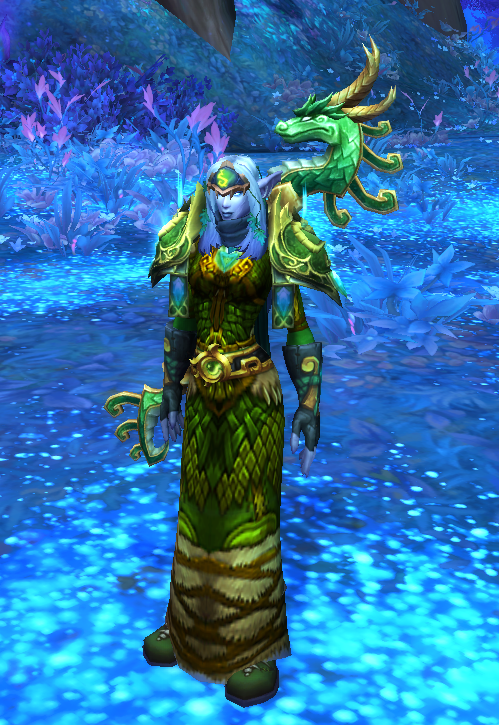
Continuing with my project to make dragon-themed transmog sets for the five flights, I have a druid of the green dragonflight. Here’s what went into the set.
Want to add some color to your tabletop role-playing games? Here’s a quick method to roll up a random tavern, complete with name, atmosphere, staff, and even the potential for some side stories to shake up your ongoing plot.
First, to name your tavern, roll a d20 twice to get two numbers between 1 and 20. Apply the following adjustment for the quality of the establishment to each number to get two final results between -2 and 23.
Quality
Adjustment
Squalid
-3
Poor
-2
Common
-1
Average
0
Nice
+1
Fine
+2
Exquisite
+3
Find the result of your two rolls on the table below. You can either name your tavern “The Adjective Noun” or “The Noun and Noun.”
Let’s say you’re making a poor tavern and you roll a 9 and a 2. You subtract 2 from the results to get 7 and 0. That gives you The Grim Snake, The Dead Sailor, or The Snake and Sailor (or Sailor and Snake), whichever one sounds best for your setting. If you’re making a fine tavern and you roll a 6 and a 15, those become 8 and 17, giving you The Lost Hero, The Cheerful Hare, or The Hare and Hero / Hero and Hare. (Of course, reroll or adjust if you’re not happy with any of the results.)
Roll
Adjective
Noun
-2
Hanged
Rat
-1
Drowned
Thief
0
Dead
Snake
1
Drunk
Outlaw
2
Dizzy
Badger
3
Tipsy
Shepherd
4
Lazy
Dog
5
Thirsty
Drover
6
Hungry
Cat
7
Grim
Sailor
8
Lost
Hare
9
Lonely
Tailor
10
Wandering
Lamb
11
Quiet
Rider
12
Stout
Bull
13
Drowsy
Knight
14
Merry
Deer
15
Lucky
Curate
16
Cozy
Stag
17
Cheerful
Hero
18
Dancing
Lion
19
Winsome
Prince / Princess
20
Flying
Peacock
21
Blessed
Sovereign
22
Glorious
Unicorn
23
Regal
Dragon
Now that you have a name, the next thing to do is roll up the atmosphere and staff. For this roll a d6 and apply the same adjustments for quality.
Roll
Atmosphere and staff
-2
A rickety old hovel, half falling down, with rotten floorboards and vermin scuttling just out of sight. The staff is surly and suspicious of outsiders.
-1
A dilapidated shanty with broken windows. The wind whistles through chinks in the walls and rain soaks through the uneven thatch of the roof. The staff is gloomy and unhelpful.
0
A ramshackle place knocked together from an old barn and its outbuildings. The staff is tired and rude.
1
A worn-out house that’s seen better days; the furniture is unsteady, and the curtains are faded. The staff is harried and disagreeable; they respond to the needs of their guests, but slowly and with lots of grumbling.
2
A modest establishment with good ale and decent food, but the furnishings are old and threadbare, the beds are uncomfortable, and the walls are thin. The staff is capable but does not take initiative and is hard to get moving.
3
An old but tidy farmhouse adapted to hosting travelers; everything inside is worn but well cared for. The staff is polite and proud of their inn, but they have limited resources to work with.
4
A plain but cozy little inn; most of the guests are regulars from the local countryside who come here to see old friends and enjoy familiar comforts after a hard day’s work. The staff is cheerful and helpful, but often distracted by conversations with regulars.
5
A comfortable and well-kept place; the furnishings are new and pleasant, but not expensive. The staff is proud of their tavern; they are gracious to guests who appear well-to-do, but brusque with any visitors who seem poor or unkempt.
6
A charming old-fashioned tavern that has been run by the same family for generations; many of the furnishings are heirlooms passed down from the original owners. The staff knows the full history of the inn and will share interesting historical tidbits at the drop of a hat, but doesn’t know much else.
7
A new establishment, recently built with all the modern conveniences, comfortable rooms, and excellent food. The staff is eager to advertise and encourages guests to spread the word.
8
A luxurious retreat, built in the style of distant lands and filled with imported luxuries; exotic spices flavor the food and vintage wines fill the cellars. The staff performs elaborate courtesies with an affected air, but are also expert at discreetly fulfilling guests’ wishes, even the more unusual ones.
9
A palatial lodging built with cut and polished stone, gilded everywhere; the furnishings are immaculate antiques, and the serving wares are the finest porcelain and silver. The staff is highly competent, discreet and unflappable, accustomed to both accommodating the whims of wealthy clients and being handsomely rewarded for their service.
If you want to add a little extra drama to your characters’ stay at the tavern, you can also roll up a little side story with a d6, applying the same modifier for the quality of the place. How your players deal with this added drama is up to them.
Roll
Drama
-2
A gang of brigands is dividing up the loot from their latest raid in a corner of the common room. They suspect the player characters may be hunting them, so they try to look innocent, which only makes them look more suspicious. They are likely to react with violence if challenged.
-1
A young traveler spots the player characters and thinks they recognize the person who killed their parents and against whom they swore vengeance. (They may or may not be correct, depending on your party’s backstories and adventuring habits.)
0
The kitchen catches fire in a cooking accident, and the guests are called upon to help evacuate the inn and fight the blaze.
1
A very large, very drunk patron spills their drink on one of the player characters and gets belligerent demanding the character buy them a new drink.
2
The innkeeper accuses the player characters of trying to pay with counterfeit coins. Depending on the setting, local law enforcement may or may not get involved before everything can be sorted out.
3
A smuggler, on the run from the law, attempts to slip some of their contraband into the player characters’ baggage.
4
A spy in the service of the player characters’ enemies is staying at the same inn. In their haste to get away before the party notices them, they accidentally leave behind some evidence that helps the party on their current quest.
5
Two young nobles from rival houses are staying at the inn under false names, having run away from their families together. They fear that the player characters may recognize them, so they take steps to evade, eliminate, or ingratiate themselves with the party.
6
One of the player characters recognizes a familiar taste in the cooking and discovers that someone from their past is working in the kitchen. Whether the reunion is a happy or tense one is up to you and the player.
7
One of the staff falls into hero worship of one of the player characters and hangs around making starry eyes at them and being generally awkward but harmless. They may be persuaded to do something to help out their newfound hero.
8
The player characters are mistaken for visiting dignitaries from an important neighboring power and find themselves besieged by petitioners and sycophants.
9
A wandering prophet recognizes the player characters and offers to share valuable information about their current quest in exchange for picking up the prophet’s rather hefty bar tab.
Image: Interior of a Tavern, with Cardplayers and a Violin Player, via Wikimedia (currently Royal Collection, UK; c. 1695; oil on canvas; by Jan Steen)
My next dragon-themed transmog is for the bronze dragonflight. Here’s my hunter in mail with a scaly bronze theme and some dragony accessories. You can see the gear here.
You can check out my previous transmogs for the blue and red dragonflights, too.
Image: World of Warcraft screencap
Of Dice and Dragons is an occasional feature about games and gaming.




 Co-Geeking

_-_Interior_of_a_Tavern,_with_Cardplayers_and_a_Violin_Player_-_RCIN_405825_-_Royal_Collection.jpg)
You must be logged in to post a comment.