In ancient Greece, as in many pre-industrial societies, textile work was primarily the domain of women, and since ordinary women and their lives rarely appealed to ancient Greek artists as a subject, we have few artistic depictions of women doing the work that filled much of their lives. That fact is one of the things that makes this vase so interesting. The decoration on the main body of this vase depicts many different stages of textile work, including spinning thread, weaving, folding the finished cloth, as well as weighing and perhaps dyeing it. All of these activities were part of the daily life of most women in ancient Athens, where this vase was painted.
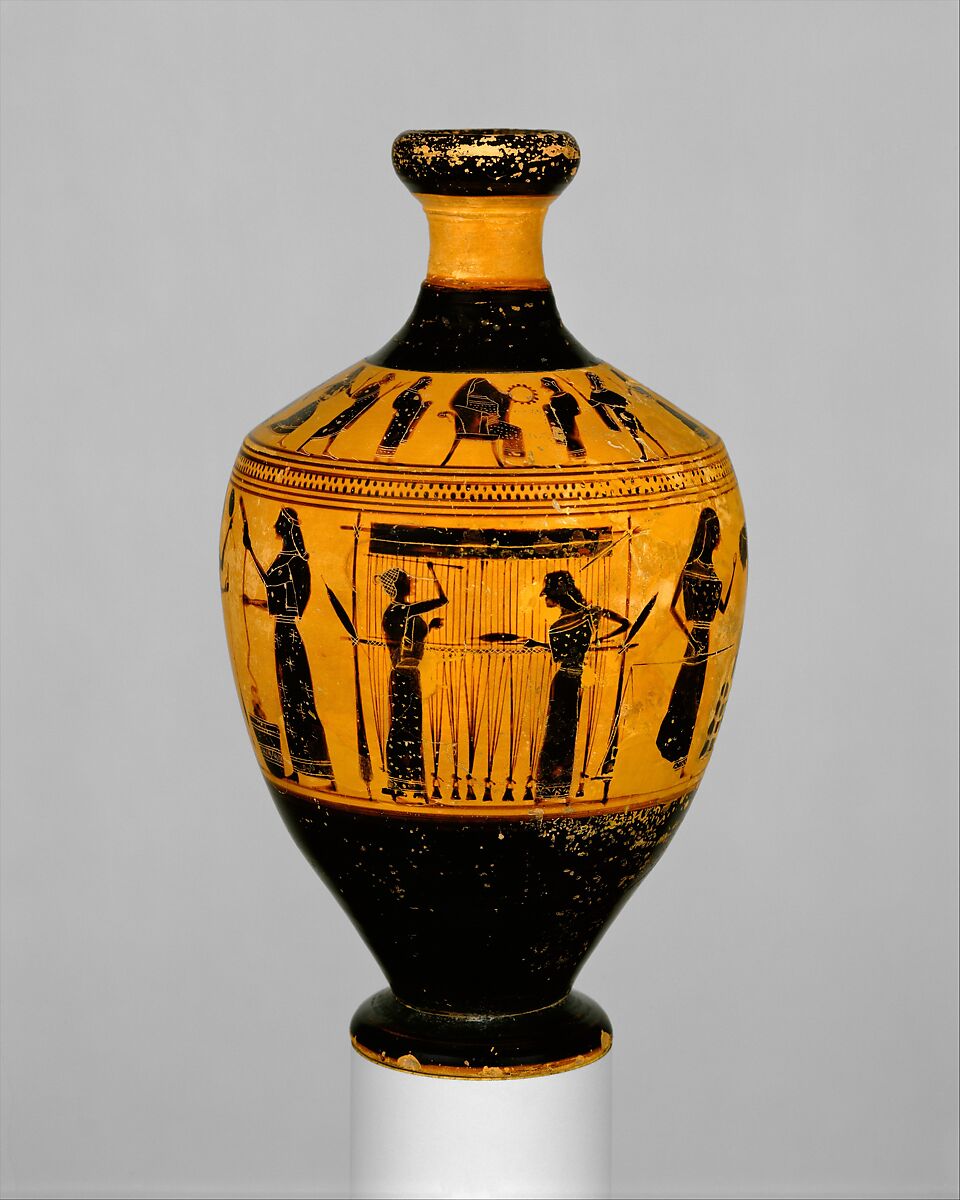
As we discussed in our series about textile production, making cloth and making clothes took up an enormous amount of time. It’s interesting to speculate on why someone might have chosen such a theme for a piece of tableware in their home. Was this a commission for a family who was in the textile business, not just producing for home use? Was it meant to celebrate the unsung daily labor of Athenian women by putting it in the same artistic frame as the deeds of gods and heroes? Was it a marketing ploy to try to appeal to a feminine audience?
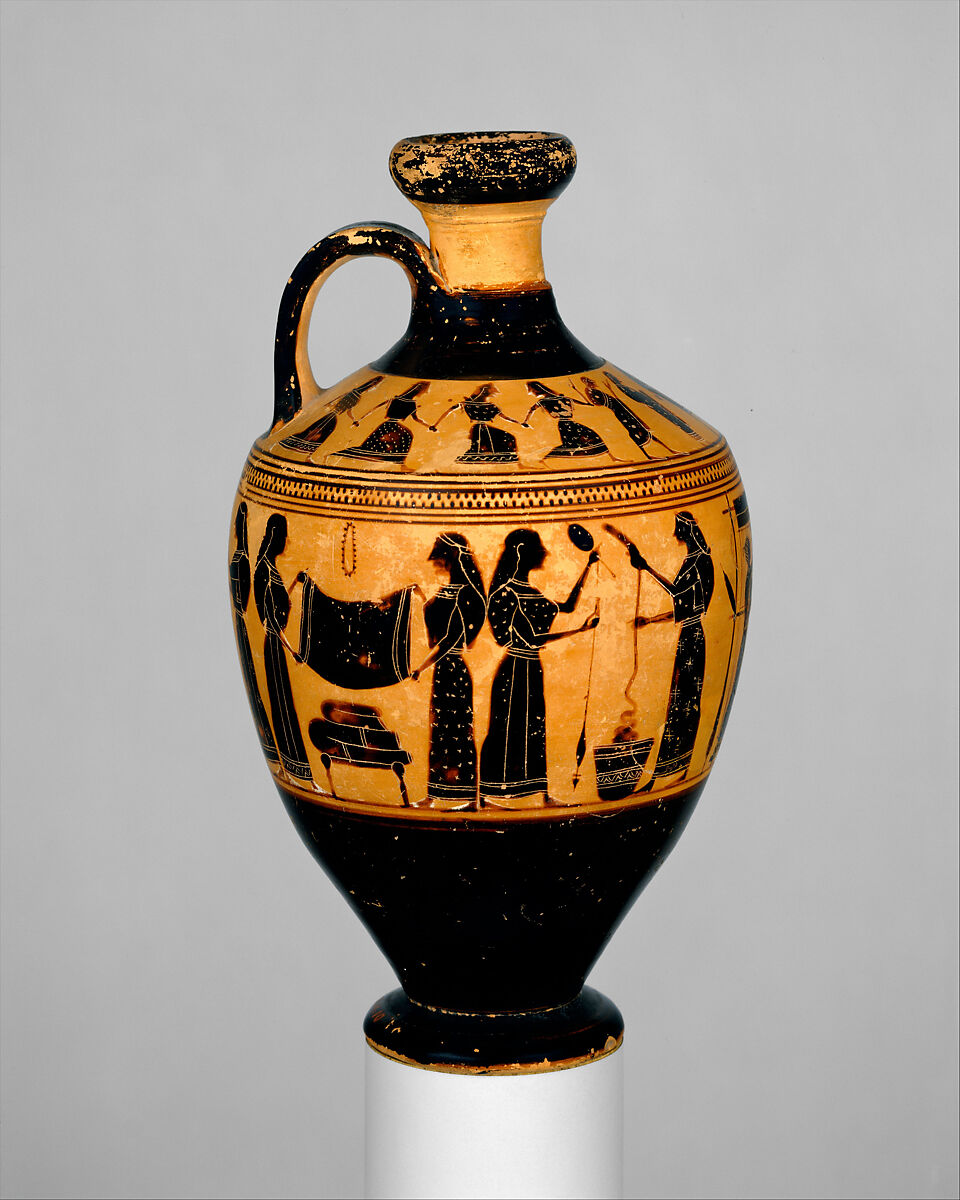
Whatever the artist’s intent may have been, this is a wonderful piece to have surviving from antiquity.
Out There highlights intriguing art, places, phenomena, flora, and fauna.
 Co-Geeking
This is fabulous. I’m most struck by the weaving. Most sources that I’ve seen talk about fabric made on an upright loom being narrow, but clearly here the loom is set up quite wide and requires two weavers. Could not have clearer evidence that it’s possible to weave wider fabrics in the antiquity!
LikeLike